
Views: 0 Author: Site Editor Publish Time: 2025-04-26 Origin: Site
Ever seen industrial sludge transformed into reusable solids? Modern centrifuges now achieve 50% dryness while cutting energy use by 40%.Industries face growing pressure to recycle wastewater and meet eco-standards. Traditional methods often fail with sticky slurries or fine particles, risking environmental penalties.
In this guide, you'll discover:
Smart centrifuges with PLC automation for precise separation
Cost-saving filters reducing liquid waste in mining and farming
Breakthrough tech handling high-viscosity materials without dilution
From food processing to renewable energy, we break down equipment that turns waste into value.
Solid-liquid separation removes suspended particles from fluids using physical forces. Common methods include centrifugal spinning, pressure filtration, and gravity settling.
Centrifuges use rapid spinning (3,000-15,000 RPM) to separate materials by density. In mining, they concentrate gold ore by forcing heavy particles against chamber walls while lighter liquids exit through outlets. Dairy plants rely on them to isolate milk fat from whey, achieving 99% purity through layered separation. Their sealed design prevents contamination, making them ideal for pharmaceutical intermediates like antibiotic slurries. Modern versions feature PLC controls that auto-adjust speeds based on material viscosity, reducing energy use by 25% compared to older models.
These systems compress sludge between plates under 15-30 bar pressure, squeezing out liquids until solids reach 60-80% dryness. Municipal wastewater plants use them to transform sewage sludge into transportable cakes, cutting disposal costs by 60%. A key innovation is the "self-cleaning filter cloth" that peels off dried waste without manual scraping. In lithium battery recycling, they extract electrolyte fluids from crushed cells while retaining 95% of reusable metals. Their modular design allows quick plate replacement – a 10-minute process that minimizes downtime.
Equipped with 0.1mm-5mm mesh panels, these screens shake materials to separate solids from liquids through size exclusion. Food processors prevent pipe clogs by removing potato skin fragments from wash water, while palm oil mills recover 8% more crude oil from fruit pulp. Advanced models use ultrasonic vibrations to clear blocked pores automatically, maintaining 98% flow efficiency during 24/7 operations.
Livestock farms process 10 tons/hour of manure into fertilizer pellets with 30% faster drying. The system captures ammonia emissions for reuse as nitrogen supplements, reducing synthetic fertilizer purchases by 40%. Separated liquid becomes irrigation water containing phosphorus and potassium – a closed-loop solution adopted by 65% of EU dairy farms since 2024.
Hybrid centrifugal-filter systems remove 90% of spent catalyst powders from fuel. A single unit handles 500 barrels/day, recovering platinum-group metals worth $8,000/daily at current prices. Cleaner fuels now meet Euro VII emission standards without additional additives, saving refineries $1.2 million annually in compliance costs.
Ceramic membrane filters achieve 0.01μm precision for antibiotic purification. This eliminates 99.9% of bacterial endotoxins while preserving drug potency – critical for injectable medications. During COVID-24 vaccine production, these systems enabled 24/7 sterile filtration with 30% higher yield than traditional methods.
Modern industries demand energy-efficient, high-precision separation systems to meet sustainability goals. While traditional methods like rotary centrifuges and belt filters remain relevant, advanced ceramic vacuum filtration has emerged as a game-changer – particularly the TC Precise Ceramic Disc Vacuum Filter, designed by Nuclear Industry Yantai Toncin Group Co., Ltd.
The TC series combines ultra-fine ceramic membranes (1800-mesh precision) with PLC-controlled vacuum systems. Its patented capillary action extracts liquids through microscopic pores (0.01-0.1μm) while retaining solids, achieving:
<0.5% moisture in filter cakes (vs. 15-20% in belt filters)
90% energy savings compared to conventional filters
50ppm solid content in discharged liquids – ideal for wastewater reuse
Key innovations driving adoption:
Self-cleaning ultrasonic membranes prevent clogging (98% uptime)
Modular ceramic plates allow custom configurations for ores, chemicals, or biomass
Closed-loop water recovery reduces freshwater consumption by 70% in mining operations
Extracts 98% pure copper concentrate from tailings slurry
Recovers 3.2L/ton of process water in gold ore processing
Meets EU Directive 2024/67 on mine wastewater recycling
Treats 500m³/day of urban sludge into reusable compost (30% faster than anaerobic digestion)
Removes 99.9% microplastics from river remediation projects
Sterilizes antibiotic broths with 0.01μm ceramic membranes
Reduces endotoxin levels to <0.25 EU/mL for injectable drugs
Q1: How does ceramic filtration compare to thermal drying?
Ceramic systems use 90% less energy than thermal dryers while achieving comparable moisture levels. No combustion risks or NOx emissions.
Q2: Can it handle abrasive materials like iron ore?
Yes. The 500t hydraulic-pressed ceramic plates withstand 8bar pressure and 15m/s slurry flows. Service life exceeds 5 years in hematite processing.
Q3: What’s the ROI timeline for small wastewater plants?
Typical payback period is 14 months through reduced disposal fees and water reuse credits.
Q4: How does automation reduce labor costs?
PLC systems enable unattended 72-hour operations – 85% fewer technicians needed vs. manual filter presses.
Nuclear Industry Yantai Toncin Group Co., Ltd. delivers turnkey solutions combining:
ISO 9001-certified manufacturing with 10,000m² production facilities
Global technical support (24/7 remote monitoring + onsite commissioning)
Customized R&D for rare earth separation and nano-material recovery
Explore how the TC Precise Ceramic Disc Vacuum Filter aligns with your ESG targets and operational KPIs. Request a free dewatering analysis report to quantify potential savings.
Data sourced from TC series technical specifications and 2024 industry case studies.
Waste disposal expenses drop 40-70% through volume reduction. Cement plants save $12/ton by repurposing filtered wastewater for cooling instead of purchasing fresh supplies. Mining tailings processing costs fall 55% when centrifuges recover 85% of process water onsite.
Lithium-ion battery recyclers extract 98% pure cobalt and nickel using pressurized filters. Each ton of processed batteries yields $4,200 in metals – 3x the value of traditional smelting. Urban sewage plants now harvest 1kg of phosphorus from every 10m³ of sludge, enough to fertilize 50m² of farmland.
River pollution decreases 85% as industries stop discharging untreated slurries. Salmon populations rebounded 300% in Canada’s Fraser River after pulp mills installed vibrating screens to remove 99% of microplastics. Carbon emissions drop 18% sector-wide through reduced sludge transportation and incineration.
Machine learning algorithms now predict filter clogging 2 hours in advance by analyzing pressure curves. This prevents 92% of unplanned shutdowns in chemical plants. Centrifuges with IoT sensors auto-adjust RPM based on real-time density measurements, improving separation accuracy by 37%.
Solar-powered vibrating screens cut electricity use by 60% in remote mines. Regenerative braking systems in large centrifuges recover 15% of rotational energy for reuse – enough to power 20 households daily.
Combined centrifuge-filter units handle complex mixtures like oil sands tailings. They first spin out 80% of bitumen, then press the remaining slurry to recover 95% of process water – a dual-stage approach adopted by 45% of Canadian extraction sites since 2024.
Smart systems now automate adjustments based on material viscosity, making operations safer and more efficient.
Industrial solid-liquid separators now achieve 85% faster processing than traditional methods while cutting energy use by 30%. Their self-cleaning mesh filters and PLC automation adapt to materials from pharmaceutical slurries to mining waste without manual adjustments.
Cities reuse 70% of treated wastewater for irrigation, and farms convert 90% manure into organic fertilizer within 24 hours. These systems reduce river pollution by 60-85% while recovering lithium, copper, and rare metals for electronics manufacturing.
Modern solid-liquid separation technologies are revolutionizing industries by enhancing efficiency, reducing energy consumption, and enabling resource recovery. From advanced centrifuges and ceramic vacuum filters to hybrid systems, the innovations outlined in this guide demonstrate how businesses can achieve significant cost savings, improve environmental sustainability, and optimize operational performance. By adopting cutting-edge filtration and separation equipment, industries can turn waste into valuable resources, helping them meet sustainability goals while staying competitive.
The rubber belt vacuum filter is a high-efficiency filtration and solid-liquid separation equipment independently developed by our company on the basis of the introduction of foreign technology of similar products.
SGN Deep Cone Paste Thickener is mainly composed of deep taper, feeding device, stirring device, control box, drug delivery device and automatic control system. Slurry first enters the deaeration tank for processing, and then enters the swirling feeding tank. The pulp after flocculated in the feeding tank enters the dense sediment layer. By the reflocculation, filtration, and compression of the dense sediment layer, the clarified overflow water is discharged from the overflow weir and the high concentration underflow is discharged from the bottom cone.
The rubber belt vacuum filter is a high-efficiency filtration and solid-liquid separation equipment independently developed by our company on the basis of the introduction of foreign technology of similar products.
Tower/vertical press filter use air or water to form a huge pressure difference on both sides of filter cloth to achieve very efficient separation of solid and liquid.
GNZ centre drive efficient thickener is a kind of new-style solid-liquid separation equipment, and is designed by our company with the introduction of foreign advanced technology.
The rubber belt vacuum filter is a high-efficiency filtration and solid-liquid separation equipment independently developed by our company on the basis of the introduction of foreign technology of similar products.
Toncin horizontal rubber vacuum belt filter is a new-type, high-efficiency, and continuous-operation solid-liquid separation mechanical equipment developed by our company on the basis of introducing, digesting, and absorbing technologies of similar foreign products. At the same time, it is also a kind of mechanical equipment that fully utilizes the gravity and vacuum suction to achieve solid-liquid separation. In the structure, the vacuum zone is arranged in the horizontal direction, and the length of the vacuum zone can be continuously used to complete different processes such as filtration, washing, and blotting etc. It has the advantages of high filtration effect, large production capacity, good washing effect, wide application range, simple and smooth operation and convenient maintenance etc. It is particularly suitable for filtering suspension slurry with solid coarse particles, high density and filter cakes need to wash many times. It can be widely used in solid-liquid separation in metallurgy, mining, chemical, papermaking, food, pharmaceutical and environmental protection and other industrial sectors; and it particularly has a good application in the wet flue gas desulfurization gypsum dehydration (FGD).
Toncin belt filter press is a high-efficiency solid-liquid separation device based on the principles of chemical flocculation contact filtration and mechanical extrusion. It features a simple process flow, high automation, continuous operation, convenient control, and adjustable working parameters. When used in conjunction with a gravity thickener, it can eliminate the need for a material concentration tank, thereby saving construction costs to some extent. As a result, it is gaining increasingly widespread application across various industries.
Currently, the belt filter press is widely used for sludge dewatering in municipal sewage, textile printing and dyeing, electroplating, papermaking, leather, brewing, food processing, coal washing, petrochemicals, chemical industry, metallurgy, pharmaceuticals, ceramics, and other sectors. It is also suitable for solid-liquid separation or leaching processes in industrial production.
The SSPF smart row plate filter press is a fast opening and closing plate filter press which mainly consists of the electrical control system, hydraulic control system and the main engine.
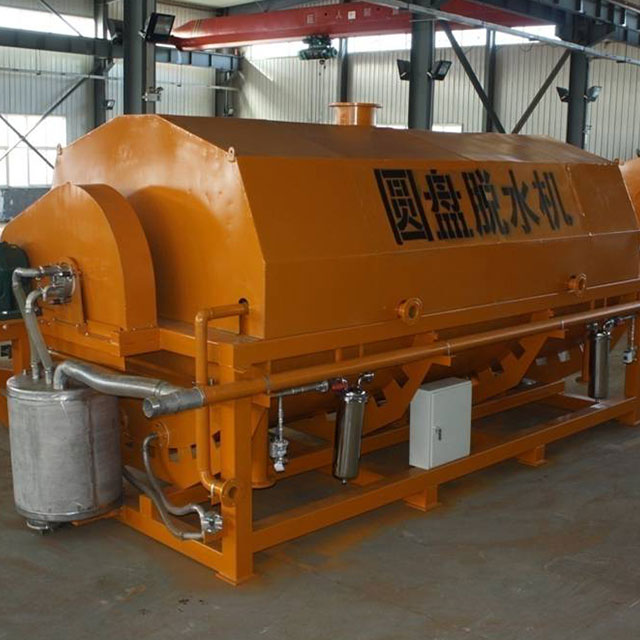
ZPL series filter cloth type of disc dewatering machine has the advantages of small area, large processing capacity, low cost, easy large-scale, mature technology, reliable running and convenient operation, so it can be widely promoted in the field of desulfurization.
GNZ centre drive efficient thickener is a kind of new-style solid-liquid separation equipment, and is designed by our company with the introduction of foreign advanced technology.
The belt filter press is one kind of solid-liquid separation equipment that is useful to separate the solid particles with size more than micron to millimeter from the liquid (water). The advantages of this equipment is highly automation, simple and easy maintenance and low labour intensity.
Ceramic filter plate, also known as ceramic filter, ceramic plate and filter plate, is a new filter medium made of corundum and silicon carbide by special techniques. Our ceramic filter plates have been widely used in the filter dewatering of iron concentrate, zinc concentrate, copper concentrate, nickel concentrate, aluminum concentrate, gold concentrate, and other non-metallic concentrates and the solid-liquid separation of coal, fine chemical engineering, paper, pharmaceutical, chemical fiber, food, environmental protection and other sectors.
HVPF vertical automatic press filter is the most advanced filter that the world has ever get. Vacuum has a limit, but Pressure not. HVPF vertical automatic press filter use air or water to form a huge pressure difference on both sides of filter cloth to achieve very efficient separation of solid and liquid.
Toncin horizontal rubber vacuum belt filter is a new-type, high-efficiency, and continuous-operation solid-liquid separation mechanical equipment developed by our company on the basis of introducing, digesting, and absorbing technologies of similar foreign products. At the same time, it is also a kind of mechanical equipment that fully utilizes the gravity and vacuum suction to achieve solid-liquid separation. In the structure, the vacuum zone is arranged in the horizontal direction, and the length of the vacuum zone can be continuously used to complete different processes such as filtration, washing, and blotting etc. It has the advantages of high filtration effect, large production capacity, good washing effect, wide application range, simple and smooth operation and convenient maintenance etc. It is particularly suitable for filtering suspension slurry with solid coarse particles, high density and filter cakes need to wash many times. It can be widely used in solid-liquid separation in metallurgy, mining, chemical, papermaking, food, pharmaceutical and environmental protection and other industrial sectors; and it particularly has a good application in the wet flue gas desulfurization gypsum dehydration (FGD).
The DU rubber belt vacuum filter operates by utilizing vacuum negative pressure to achieve solid-liquid separation. Its filtration section is horizontally arranged, allowing for continuous processes such as filtration, washing, blotting, and filter cloth regeneration. This equipment boasts high filtration efficiency, a large production capacity, effective washing capabilities, a low water content in the filter cake, flexible operation, and minimal maintenance costs.
GNZ centre drive efficient thickener is a kind of new-style solid-liquid separation equipment, and is designed by our company with the introduction of foreign advanced technology.
HVPF vertical automatic press filter is the most advanced filter that the world has ever get. Vacuum has a limit, but Pressure not. HVPF vertical automatic press filter use air or water to form a huge pressure difference on both sides of filter cloth to achieve very efficient separation of solid and liquid.
Toncin GNZ centre drive efficient thickener is a kind of new-style solid-liquid separation equipment, and is designed by our company with the introduction of foreign advanced technology.
HVPF vertical automatic press filter is the most advanced filter that the world has ever get. Vacuum has a limit, but Pressure not. HVPF vertical automatic press filter use air or water to form a huge pressure difference on both sides of filter cloth to achieve very efficient separation of solid and liquid.
GNZ centre drive efficient thickener is a kind of new-style solid-liquid separation equipment, and is designed by our company with the introduction of foreign advanced technology.
Rubber filter belt is also called rubber drainage belt (vacuum belt), it is key part of vacuum belt filter(HVBF or VBF). The Carcass material of belt is PE/EE, which has excellent qualities like high strength, anti-acid/alkali/petrol/low and high temperature, and the most outstanding feature is low elongation rate under specified load, this can make sure the fabric is not easy to deform.
TC series ceramic vacuum filter is a new type high-effect, energy saving filtration equipment, using vacuum and ceramic plate with micro-holes for solid-liquid separation. The plate material is corundum, resisting to almost all temperatures, and has a long operation life. The micro-holes in plates only allows liquid to flow through but not air and solid. Filtrate is drawn through the ceramic plates as they are immersed into the slurry cabin, and cakes forms on the surface of the Plates.
Belt Filter Press sludge dewatering machine
Warranty: 1 Year
Certification: CE/ISO 9001/ IS0 14001
Capacity: customized
After Warranty Service: Field maintenance and repair service
The DU rubber belt vacuum filter is equipment that realizes solid-liquid separation with vacuum negative pressure as driving force.The equipment has the advantages of high filtration efficiency, large production capacity, good washing effect, low water content of the filter cake, flexible operation and low maintenance cost etc. It can be widely used for solid-liquid separation in the fields of metallurgy, mining, chemical, papermaking, food, pharmacy and environmental protection etc. and it particularly has a good application in the flue gas desulfurization gypsum dehydration (FGD).
The rubber belt vacuum filter is a high-efficiency filtration and solid-liquid separation equipment independently developed by our company on the basis of the introduction of foreign technology of similar products.
TC series ceramic vacuum filter is a new type high-effect, energy saving filtration equipment, using vacuum and ceramic plate with micro-holes for solid-liquid separation. The plate material is corundum, resisting to almost all temperatures, and has a long operation life. The micro-holes in plates only allows liquid to flow through but not air and solid. Filtrate is drawn through the ceramic plates as they are immersed into the slurry cabin, and cakes forms on the surface of the Plates.
Ceramic filter plate, also known as ceramic filter, ceramic plate and filter plate, is a new filter medium made of corundum and silicon carbide by special techniques. Our ceramic filter plates have been widely used in the filter dewatering of iron concentrate, zinc concentrate, copper concentrate, nickel concentrate, aluminum concentrate, gold concentrate, and other non-metallic concentrates and the solid-liquid separation of coal, fine chemical engineering, paper, pharmaceutical, chemical fiber, food, environmental protection and other sectors.
Email: toncinfilter@toncin.com