
Views: 0 Author: Site Editor Publish Time: 2026-07-02 Origin: Site
Wet-process phosphoric acid production operates under extremely high stakes in today's industrial landscape. In this demanding environment, the filtration stage acts as the primary bottleneck. It ultimately determines your overall P2O5 yield and drives true plant profitability. Modern facilities face incredibly extreme operating conditions every single day. Process engineers must handle highly corrosive acidic slurry while actively fighting severe gypsum scaling. Because of these harsh realities, you require continuous, high-throughput separation equipment to maintain stable production. This article provides a highly technical, vendor-neutral framework to guide your next equipment upgrade. We will help you thoroughly evaluate, specify, and shortlist the best continuous filtration systems for phosphoric acid plants. You will learn key design parameters to maximize recovery and ensure long-term mechanical reliability.
Maximizing $P_2O_5$ recovery relies heavily on multi-stage counter-current washing capabilities, requiring precise wash zone sizing.
The longevity of a rubber belt vacuum filter in this application depends strictly on compounding quality (acid and heat resistance) and structural metallurgy.
Filter cloth selection is a balancing act between capturing fine gypsum crystals and preventing rapid media blinding.
Phosphoric acid production relies on highly efficient solid-liquid separation. The core business objective is straightforward. You must separate solid phosphogypsum from liquid phosphoric acid. However, separation alone is not enough. You must also extract the maximum amount of residual acid trapped inside the gypsum cake. Operators achieve this through extensive cake washing. A high-quality belt filter executes this washing phase without excessively diluting the final product.
Process engineers measure filtration success using three strict criteria. First, they monitor filtration rates, typically measured in tons per square meter per hour. High rates indicate efficient liquid flow. Second, they evaluate the moisture content of the discharged gypsum. Lower moisture means better vacuum extraction. Third, they measure soluble P2O5 losses. You must keep these losses to an absolute minimum to ensure high plant profitability.
Historically, plants utilized tipping pan filters or rotary drum filters. These older technologies present significant limitations. Rotary drums offer restricted washing areas. Tipping pans involve complex mechanical moving parts, leading to frequent mechanical failures. Continuous horizontal filters solve these exact problems. They provide unhindered, massive surface areas for cake washing. They also scale perfectly for high-tonnage modern facilities. This scalability makes them the undisputed industry standard for wet-process phosphoric acid plants.
Install real-time flow meters on all filtrate discharge lines.
Sample discharged gypsum every shift to test for soluble P2O5.
Monitor vacuum pressure drops across different filtration zones continually.
Phosphoric acid slurry presents a uniquely hostile chemical environment. It contains free sulfuric acid, hydrofluoric acid, and abrasive silica particles. Standard equipment materials degrade rapidly under these conditions. A standard rubber belt vacuum filter will fail quickly if improperly specified. You must demand specialized elastomer compounds. EPDM rubber offers excellent resistance to hot acidic environments. Certain heavily compounded natural rubber blends also perform well. Manufacturers must vulcanize these materials specifically for high-temperature acid service.
Structural metallurgy represents another critical design imperative. Standard 304 or 316 stainless steels cannot survive here. Fluoride and chloride impurities in the acid cause rapid pitting and stress corrosion cracking. You must specify high-alloy stainless steels for all wetted parts. Industry standards dictate the use of 904L stainless steel, Alloy 28, or high-grade duplex stainless steels. These premium alloys protect the vacuum boxes, structural frames, and filtrate receivers from premature failure.
The vacuum box design requires meticulous engineering. Belt filters operate under high vacuum pressure. This pressure creates immense downward force on the rubber belt. This force generates severe friction against the stationary vacuum box. To solve this, engineers utilize low-friction wear strips. PTFE (Teflon) belts or strips significantly reduce drag. Reduced drag minimizes the main drive motor load. It also preserves the rubber belt while maintaining a tight, leak-proof vacuum seal.
Component | Standard Application Material | Phosphoric Acid Requirement | Failure Risk if Ignored |
|---|---|---|---|
Rubber Belt | Standard SBR Rubber | EPDM or Premium Natural Rubber | Rapid blistering and thermal cracking |
Vacuum Box | 316L Stainless Steel | 904L or Alloy 28 | Severe pitting and chloride corrosion |
Wear Strips | UHMW Polyethylene | Reinforced PTFE | High friction and premature belt tearing |
Structural Frame | Carbon Steel (Painted) | Duplex Stainless or Rubber-Lined | Catastrophic structural collapse from acid spills |
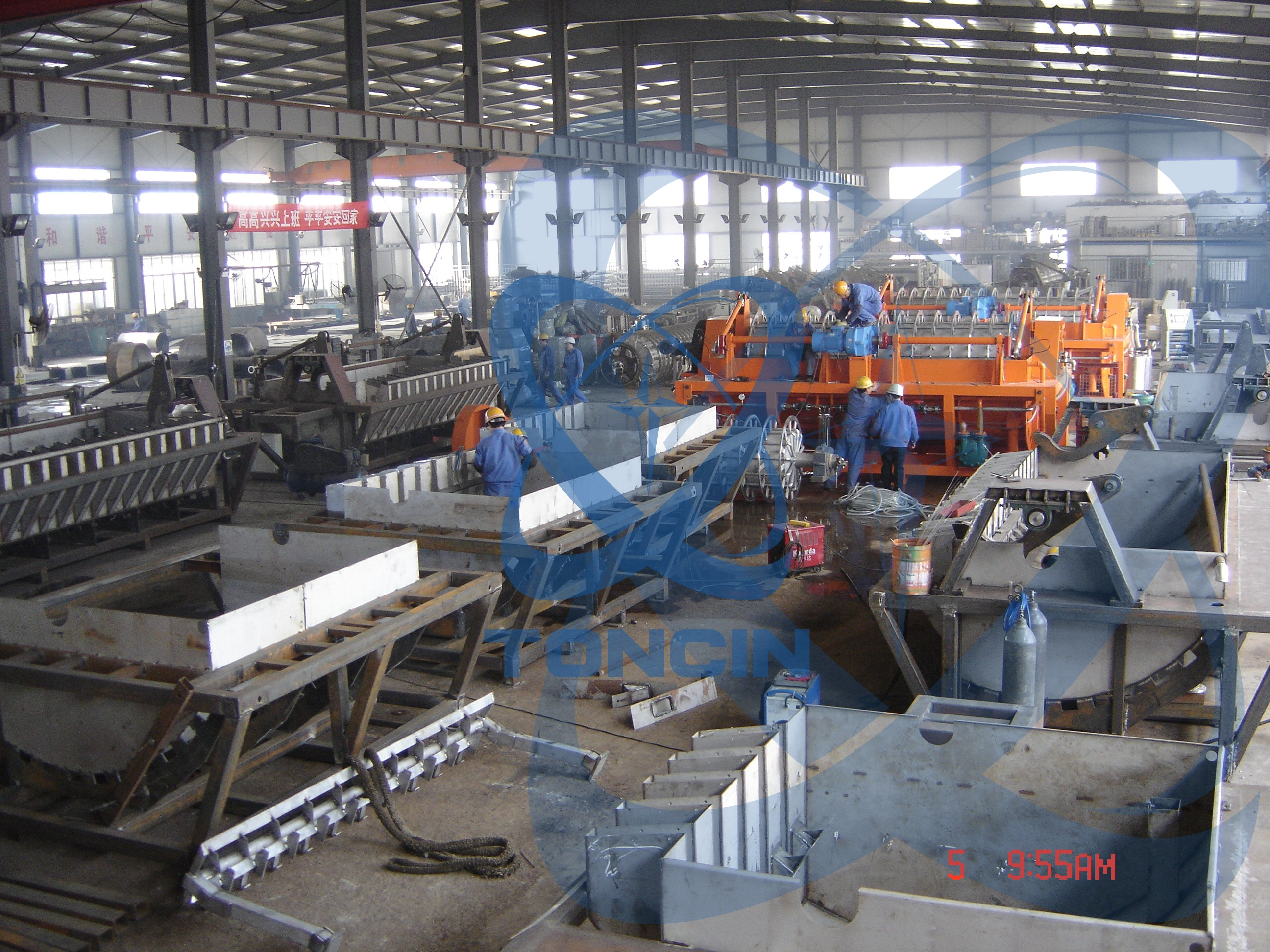
Modern phosphoric acid plants demand highly flexible equipment. A modular vacuum pan design provides this flexibility. It allows operators to segment the filter into distinct operational zones. You can independently control the form zone, multiple wash zones, and the final drying zone. Independent control lets you optimize vacuum levels for each specific process step. This modularity ensures maximum extraction efficiency.
Multi-stage counter-current washing is the secret to maximizing acid recovery. In this process, you introduce fresh wash water only at the final washing stage. The filtrate collected from this final stage then becomes the wash liquid for the preceding stage. You repeat this backward flow for two or three stages. This counter-current method produces a highly concentrated product acid. It extracts maximum residual P2O5 without introducing excessive fresh water into the plant's evaporation circuit. Specifying a properly sized vacuum belt filter for phosphoric acid ensures you have adequate physical length to accommodate these multiple stages.
Process engineers must carefully evaluate performance versus footprint. Do not look solely at the total machine dimensions. You must evaluate the active filtration area. The vendor's sizing calculations must align with your specific phosphate rock quality. Rock quality dictates the resulting gypsum crystal size. Dihydrate crystals are typically blocky and filter easily. Hemihydrate crystals are needle-like and blind filter media quickly. The active area must reflect these specific crystallization dynamics.
Form Zone: Mother liquor separates from the slurry, forming the initial gypsum cake.
First Wash (Weak Acid): Recycled weak acid washes the cake, displacing strong acid trapped inside.
Second Wash (Weaker Acid): Even weaker acid washes the cake further, recovering more P2O5.
Final Wash (Fresh Water): Pure water strips the last remaining acid traces from the gypsum.
Drying Zone: Maximum vacuum pulls remaining moisture out before cake discharge.
Your filter media directly impacts daily production rates. Media permeability is the primary selection criteria. You must choose between monofilament and multifilament weaves. Monofilament threads consist of a single, solid polymer strand. They offer exceptional cake release properties. Gypsum crystals easily detach from monofilament media at the discharge roller. Multifilament weaves capture finer particles but blind much faster. You must balance particle retention against blinding resistance.
Gypsum scaling is an unavoidable reality in this industry. Hot phosphoric acid creates massive scaling challenges. The filter cloth will eventually blind without aggressive intervention. You must evaluate the cloth washing mechanisms. Vendors must provide high-pressure spray bars located on the return run of the belt. These continuous spray systems blast residual gypsum out of the fabric pores. High-pressure washing maintains media permeability and ensures continuous throughput.
Smart operators view media replacement as an operational variable, not just a consumable expense. Changing media requires complete machine downtime. You must evaluate replacement economics carefully. Easy cloth tracking systems prevent fabric wrinkling. Pneumatic tensioning systems keep the fabric taut under heavy vacuum loads. Quick-change mechanisms drastically reduce maintenance hours. These intelligent design features lower your overall operating expenses significantly.
Using excessively tight weaves to prevent cloudy filtrate, resulting in rapid machine blinding.
Ignoring the thermal limits of the polymer fabric, leading to media stretching and folding.
Failing to maintain high-pressure wash water, allowing permanent scale buildup in the pores.
Mechanical reliability dictates plant uptime. Belt tracking reliability represents the most significant operational risk. Heavy rubber belts naturally drift laterally during operation. This drift happens due to uneven cake loading or slight roller misalignments. If the belt drifts too far, it tears against the structural frame. You must require vendors to demonstrate robust automated tracking systems. Pneumatic or hydraulic tracking guides automatically adjust roller angles. They keep the massive belt perfectly centered at all times.
Vapor and vacuum load management requires precise engineering. Hot phosphoric acid produces aggressive, corrosive vapors. These vapors enter the vacuum system continually. Undersized vacuum pumps will fail to maintain sufficient pressure drops. You must address the risk of vapor carryover. Engineers handle this by combining pre-condensers with liquid ring vacuum pumps. Condensers cool the gas stream and remove corrosive droplets. This protection extends the life of your expensive vacuum pumps.
Routine cleaning and turnaround procedures demand careful planning. Mandatory descaling occurs during scheduled plant shutdowns. Maintenance teams must access the vacuum boxes and internal drainage systems quickly. If access is difficult, your downtime stretches from hours into days. Evaluate the physical layout of the machine. Look for quick-release clamps, drop-down vacuum pans, and accessible wash headers. Easy access ensures maintenance teams complete descaling tasks safely and efficiently.
Procuring capital equipment requires strict validation. Do not rely solely on a vendor's theoretical calculations. Phosphate rock behaves differently depending on its geographic origin. You must demand pilot-scale testing. Vendors should test their equipment using your actual plant slurry. Pilot testing reveals true filtration rates and washing efficiencies. This data-backed validation prevents costly undersizing errors during the procurement phase.
Warranty coverage and aftermarket support separate good vendors from great partners. Assess the manufacturer's warranty carefully. Look specifically at coverage for rubber belt degradation. Examine their guarantees regarding structural corrosion. Acid environments find every weak weld and compromised seal. A strong warranty proves the vendor trusts their chosen metallurgy and elastomer compounds.
Create a logical checklist for your final vendor evaluation. First, verify their reference list. They must demonstrate successful installations processing similar rock grades. Second, evaluate the proximity of their spare parts inventory. Waiting weeks for a replacement drive roller is unacceptable. Third, confirm their demonstrated engineering support. They must provide expert technicians for on-site installation and commissioning. This comprehensive shortlisting logic minimizes project risk.
Evaluation Metric | Minimum Acceptable Standard | Ideal Vendor Profile |
|---|---|---|
Testing Capabilities | Bench-scale leaf testing | On-site pilot plant testing with live slurry |
Material Guarantees | Standard 1-year mechanical warranty | Extended warranty on structural corrosion |
Spare Parts | International shipping available | Local warehousing of critical wear parts |
Engineering Support | Remote troubleshooting | Dedicated on-site commissioning team |
Specifying filtration equipment for wet-process phosphoric acid remains a profound exercise in risk mitigation. You must balance the initial capital expenditure for premium materials against massive operational risks. Poor extraction efficiency directly reduces your saleable product. Frequent maintenance downtime destroys annual production targets. Investing in superior metallurgy, optimized multi-stage washing, and robust tracking systems ensures long-term profitability.
Process engineers and procurement teams must act strategically. Do not release your Request for Proposal (RFP) based on outdated specifications. Consult with specialized filtration engineers to audit your current throughput data. Analyze your exact gypsum crystal structures and slurry temperatures. By demanding empirical pilot testing and rigorous material standards, you guarantee a highly efficient, reliable separation process for years to come.
A: A premium EPDM rubber belt typically lasts between two to four years in this environment. The exact lifespan varies heavily based on operating temperatures and acid concentration. Strict maintenance practices also play a major role. Regular cleaning and proper automated tracking systems significantly extend the belt's operational life.
A: Crystal shape directly dictates media permeability. Blocky dihydrate crystals stack efficiently, creating a porous cake that filters rapidly. This allows for a smaller total filter area. Conversely, hemihydrate crystals form needle-like structures. They pack tightly and blind the media quickly, requiring significantly larger active filtration areas to maintain throughput.
A: Retrofitting is sometimes possible but depends entirely on the original modularity. You can reconfigure vacuum pans to adjust wash zones if space permits. However, adding an entirely new stage usually exceeds the physical limits of the existing structural frame. It also frequently overloads the existing vacuum pump capacity.
The rubber belt vacuum filter is a high-efficiency filtration and solid-liquid separation equipment independently developed by our company on the basis of the introduction of foreign technology of similar products.
SGN Deep Cone Paste Thickener is mainly composed of deep taper, feeding device, stirring device, control box, drug delivery device and automatic control system. Slurry first enters the deaeration tank for processing, and then enters the swirling feeding tank. The pulp after flocculated in the feeding tank enters the dense sediment layer. By the reflocculation, filtration, and compression of the dense sediment layer, the clarified overflow water is discharged from the overflow weir and the high concentration underflow is discharged from the bottom cone.
The rubber belt vacuum filter is a high-efficiency filtration and solid-liquid separation equipment independently developed by our company on the basis of the introduction of foreign technology of similar products.
Tower/vertical press filter use air or water to form a huge pressure difference on both sides of filter cloth to achieve very efficient separation of solid and liquid.
GNZ centre drive efficient thickener is a kind of new-style solid-liquid separation equipment, and is designed by our company with the introduction of foreign advanced technology.
The rubber belt vacuum filter is a high-efficiency filtration and solid-liquid separation equipment independently developed by our company on the basis of the introduction of foreign technology of similar products.
Toncin horizontal rubber vacuum belt filter is a new-type, high-efficiency, and continuous-operation solid-liquid separation mechanical equipment developed by our company on the basis of introducing, digesting, and absorbing technologies of similar foreign products. At the same time, it is also a kind of mechanical equipment that fully utilizes the gravity and vacuum suction to achieve solid-liquid separation. In the structure, the vacuum zone is arranged in the horizontal direction, and the length of the vacuum zone can be continuously used to complete different processes such as filtration, washing, and blotting etc. It has the advantages of high filtration effect, large production capacity, good washing effect, wide application range, simple and smooth operation and convenient maintenance etc. It is particularly suitable for filtering suspension slurry with solid coarse particles, high density and filter cakes need to wash many times. It can be widely used in solid-liquid separation in metallurgy, mining, chemical, papermaking, food, pharmaceutical and environmental protection and other industrial sectors; and it particularly has a good application in the wet flue gas desulfurization gypsum dehydration (FGD).
Toncin belt filter press is a high-efficiency solid-liquid separation device based on the principles of chemical flocculation contact filtration and mechanical extrusion. It features a simple process flow, high automation, continuous operation, convenient control, and adjustable working parameters. When used in conjunction with a gravity thickener, it can eliminate the need for a material concentration tank, thereby saving construction costs to some extent. As a result, it is gaining increasingly widespread application across various industries.
Currently, the belt filter press is widely used for sludge dewatering in municipal sewage, textile printing and dyeing, electroplating, papermaking, leather, brewing, food processing, coal washing, petrochemicals, chemical industry, metallurgy, pharmaceuticals, ceramics, and other sectors. It is also suitable for solid-liquid separation or leaching processes in industrial production.
The SSPF smart row plate filter press is a fast opening and closing plate filter press which mainly consists of the electrical control system, hydraulic control system and the main engine.
ZPL series filter cloth type of disc dewatering machine has the advantages of small area, large processing capacity, low cost, easy large-scale, mature technology, reliable running and convenient operation, so it can be widely promoted in the field of desulfurization.
GNZ centre drive efficient thickener is a kind of new-style solid-liquid separation equipment, and is designed by our company with the introduction of foreign advanced technology.
The belt filter press is one kind of solid-liquid separation equipment that is useful to separate the solid particles with size more than micron to millimeter from the liquid (water). The advantages of this equipment is highly automation, simple and easy maintenance and low labour intensity.
Ceramic filter plate, also known as ceramic filter, ceramic plate and filter plate, is a new filter medium made of corundum and silicon carbide by special techniques. Our ceramic filter plates have been widely used in the filter dewatering of iron concentrate, zinc concentrate, copper concentrate, nickel concentrate, aluminum concentrate, gold concentrate, and other non-metallic concentrates and the solid-liquid separation of coal, fine chemical engineering, paper, pharmaceutical, chemical fiber, food, environmental protection and other sectors.
HVPF vertical automatic press filter is the most advanced filter that the world has ever get. Vacuum has a limit, but Pressure not. HVPF vertical automatic press filter use air or water to form a huge pressure difference on both sides of filter cloth to achieve very efficient separation of solid and liquid.
Toncin horizontal rubber vacuum belt filter is a new-type, high-efficiency, and continuous-operation solid-liquid separation mechanical equipment developed by our company on the basis of introducing, digesting, and absorbing technologies of similar foreign products. At the same time, it is also a kind of mechanical equipment that fully utilizes the gravity and vacuum suction to achieve solid-liquid separation. In the structure, the vacuum zone is arranged in the horizontal direction, and the length of the vacuum zone can be continuously used to complete different processes such as filtration, washing, and blotting etc. It has the advantages of high filtration effect, large production capacity, good washing effect, wide application range, simple and smooth operation and convenient maintenance etc. It is particularly suitable for filtering suspension slurry with solid coarse particles, high density and filter cakes need to wash many times. It can be widely used in solid-liquid separation in metallurgy, mining, chemical, papermaking, food, pharmaceutical and environmental protection and other industrial sectors; and it particularly has a good application in the wet flue gas desulfurization gypsum dehydration (FGD).
The DU rubber belt vacuum filter operates by utilizing vacuum negative pressure to achieve solid-liquid separation. Its filtration section is horizontally arranged, allowing for continuous processes such as filtration, washing, blotting, and filter cloth regeneration. This equipment boasts high filtration efficiency, a large production capacity, effective washing capabilities, a low water content in the filter cake, flexible operation, and minimal maintenance costs.
GNZ centre drive efficient thickener is a kind of new-style solid-liquid separation equipment, and is designed by our company with the introduction of foreign advanced technology.
HVPF vertical automatic press filter is the most advanced filter that the world has ever get. Vacuum has a limit, but Pressure not. HVPF vertical automatic press filter use air or water to form a huge pressure difference on both sides of filter cloth to achieve very efficient separation of solid and liquid.
Toncin GNZ centre drive efficient thickener is a kind of new-style solid-liquid separation equipment, and is designed by our company with the introduction of foreign advanced technology.
HVPF vertical automatic press filter is the most advanced filter that the world has ever get. Vacuum has a limit, but Pressure not. HVPF vertical automatic press filter use air or water to form a huge pressure difference on both sides of filter cloth to achieve very efficient separation of solid and liquid.
GNZ centre drive efficient thickener is a kind of new-style solid-liquid separation equipment, and is designed by our company with the introduction of foreign advanced technology.
Rubber filter belt is also called rubber drainage belt (vacuum belt), it is key part of vacuum belt filter(HVBF or VBF). The Carcass material of belt is PE/EE, which has excellent qualities like high strength, anti-acid/alkali/petrol/low and high temperature, and the most outstanding feature is low elongation rate under specified load, this can make sure the fabric is not easy to deform.
TC series ceramic vacuum filter is a new type high-effect, energy saving filtration equipment, using vacuum and ceramic plate with micro-holes for solid-liquid separation. The plate material is corundum, resisting to almost all temperatures, and has a long operation life. The micro-holes in plates only allows liquid to flow through but not air and solid. Filtrate is drawn through the ceramic plates as they are immersed into the slurry cabin, and cakes forms on the surface of the Plates.
Belt Filter Press sludge dewatering machine
Warranty: 1 Year
Certification: CE/ISO 9001/ IS0 14001
Capacity: customized
After Warranty Service: Field maintenance and repair service
The DU rubber belt vacuum filter is equipment that realizes solid-liquid separation with vacuum negative pressure as driving force.The equipment has the advantages of high filtration efficiency, large production capacity, good washing effect, low water content of the filter cake, flexible operation and low maintenance cost etc. It can be widely used for solid-liquid separation in the fields of metallurgy, mining, chemical, papermaking, food, pharmacy and environmental protection etc. and it particularly has a good application in the flue gas desulfurization gypsum dehydration (FGD).
The rubber belt vacuum filter is a high-efficiency filtration and solid-liquid separation equipment independently developed by our company on the basis of the introduction of foreign technology of similar products.
TC series ceramic vacuum filter is a new type high-effect, energy saving filtration equipment, using vacuum and ceramic plate with micro-holes for solid-liquid separation. The plate material is corundum, resisting to almost all temperatures, and has a long operation life. The micro-holes in plates only allows liquid to flow through but not air and solid. Filtrate is drawn through the ceramic plates as they are immersed into the slurry cabin, and cakes forms on the surface of the Plates.
Ceramic filter plate, also known as ceramic filter, ceramic plate and filter plate, is a new filter medium made of corundum and silicon carbide by special techniques. Our ceramic filter plates have been widely used in the filter dewatering of iron concentrate, zinc concentrate, copper concentrate, nickel concentrate, aluminum concentrate, gold concentrate, and other non-metallic concentrates and the solid-liquid separation of coal, fine chemical engineering, paper, pharmaceutical, chemical fiber, food, environmental protection and other sectors.
Email: toncinfilter@toncin.com