
Views: 0 Author: Site Editor Publish Time: 2026-06-10 Origin: Site
Industrial dewatering equipment represents a massive capital expenditure. It also locks your facility into a long-term operational commitment. Industry professionals often use continuous filtration nomenclature interchangeably. This casual terminology routinely leads to costly misapplications. Selecting the wrong dewatering system causes severe operational bottlenecks. You might experience excessive wash-water consumption daily. You could also fail to meet your target cake dryness. This failure disrupts downstream processing and spikes your waste disposal fees.
We aim to clarify the mechanical and operational distinctions between vacuum-based systems and pressure-based squeezing machines. We will deeply explore the belt filter vs belt filter press debate. You will learn exactly how each machine functions under varying industrial loads. We provide a clear, technical framework to guide your procurement strategy. You can then select equipment tailored perfectly to your specific slurry characteristics. Proper evaluation guarantees process efficiency. It prevents unexpected maintenance hurdles down the line. You will secure reliable, continuous liquid-solid separation for your facility.
Operating Principle: A belt filter (often a rubber belt vacuum filter) relies on vacuum suction to draw liquid through a horizontal cloth, whereas a belt filter press uses mechanical squeezing between two tensioned belts over decreasing-diameter rollers.
Core Strength: Vacuum belt filters excel at precise cake washing and chemical separation; belt filter presses dominate in high-throughput municipal and industrial sludge dewatering.
Cost Reality: Belt filter presses offer lower initial CAPEX but carry high hidden OPEX in the form of wash water (up to 40-50 gpm/meter) and polymer consumption.
Decision Driver: Your choice ultimately depends on the specific properties of the feed material (e.g., chemical slurry vs. biological sludge) and the requirement for post-filtration cake washing.
The industrial sector struggles daily with confusing equipment terminology. Operators and buyers frequently use the term "belt filter" as a quick shorthand for a squeezing press. However, they technically refer to two completely distinct technology classes. We must define each machine accurately to avoid procurement disasters.
A rubber belt vacuum filter operates as a continuous, horizontal liquid-solid separation device. It uses strong vacuum suction from beneath the belt to pull moisture away from the slurry. You will immediately notice its highly modular construction. These specialized zones handle distinct process steps. They manage initial filtration, single or multi-stage cake washing, and final vacuum drying. It treats delicate crystalline slurries gently without crushing the particles.
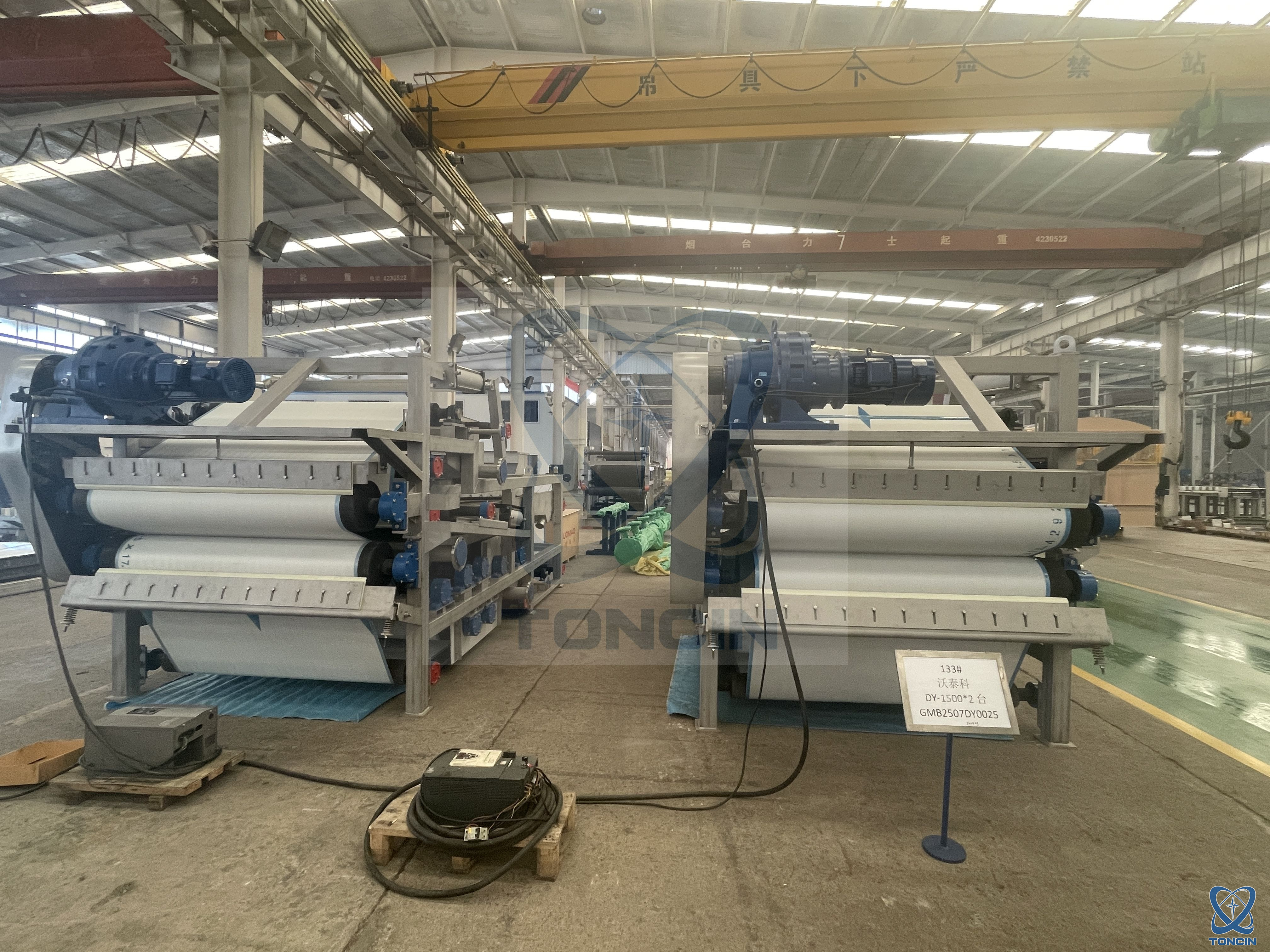
Conversely, a belt filter press functions as a heavy-duty, continuous squeezing machine. Engineers design it primarily for massive volume reduction of sludges. It follows a very distinct, three-stage operational path. First, wet sludge enters a gravity drainage zone to release free water. Next, it moves into a wedge zone for low-pressure consolidation. Finally, the sludge enters a serpentine roller zone. Here, high pressure and mechanical shear forces extract the bound water.
Understanding how these machines physically move water provides clarity. The mechanical differences dictate their ideal applications. Let us examine the specific forces at play.
Vacuum systems pull. Press systems push. A vacuum filter relies entirely on atmospheric pressure. A dedicated vacuum pump creates a pressure differential below the filter cloth. This differential pulls filtrate through the matrix smoothly. We see incredibly gentle handling here. The solid matrix remains intact. Fragile crystals do not fracture under a vacuum pull.
Presses work like a heavy rolling pin rolling over wet dough. They rely heavily on extreme belt tension. They apply intense shear forces across 26 to 34 individual bearings. As the belts weave in an S-shape over decreasing-diameter rollers, the pressure multiplies. They literally force water out of a highly flocculated sludge matrix. The sludge must possess strong structural integrity. Otherwise, it simply oozes out the sides of the belts.
We must compare their continuous wide-band loading capabilities. Belt presses handle massive volumetric loads effortlessly. One large municipal unit can process up to 180 cubic meters per hour. They dominate large-scale wastewater treatment plants for this exact reason.
Vacuum filters operate under different mathematical constraints. Engineers size them based on specific filtration area requirements and desired cake thickness. You must maintain a cake thickness of at least 3 to 5 millimeters. If the cake is too thin, it will not discharge properly from the cloth. You must constantly balance belt speed against vacuum strength to achieve the perfect discharge.
Capital cost only tells part of the story. You must evaluate the daily operational expenses. When analyzing the belt filter vs belt filter press dynamic, long-term resource consumption reveals the true winner for your budget.
Set realistic expectations for your facility. Belt filter presses typically yield 12% to 32% Total Solids (TS). This range depends heavily on your specific feed. Primary municipal sludge dewaters easily and hits the higher end. Digested biological sludge holds water tightly and falls to the lower end.
Vacuum filters achieve highly variable moisture contents. Their success depends strictly on particle size distribution. Vacuum strength plays a massive role. You can also introduce thermal inputs, like hot water washes or steam hoods, to drive moisture levels down further.
Wash water exposes a major vulnerability for the press. Continuous high-pressure spray bars must clean the belts constantly. These spray bars consume massive water volumes to prevent belt blinding. They often require up to 40 or 50 gallons per minute per meter of belt width.
Polymer dependency presents another stark operational reality. A press is only as effective as its polymer dosing system. You must chemically condition the sludge heavily to withstand the roller shear. Vacuum filters rarely need heavy polymer dosing.
Compare the energy demands next. Both systems use relatively low drive-motor energy. However, vacuum pumps draw significant, continuous electrical power. Presses utilize booster pumps and air compressors. You must weigh these utility loads carefully against your local energy rates.
Both systems feature open-frame designs. This provides excellent visual accessibility. Operators can spot process upsets quickly. Maintenance burdens differ greatly, though. Presses require tracking belt wear constantly. You must manage edge-leakage diligently. Crowned rollers help prevent sludge from spilling, but they wear down. Bearing lubrication demands strict daily attention. Vacuum systems require less mechanical troubleshooting. They have fewer moving rollers. However, they need highly optimized wash zones to keep the filter cloth porous.
For Presses: Implement an automated bearing lubrication schedule. Check belt tracking sensors weekly to prevent catastrophic edge tearing.
For Vacuum Filters: Monitor the vacuum seal water flow daily. Inspect the cloth for localized blinding spots and adjust wash headers immediately.
You cannot select equipment based on price alone. You must match the machine to your material. Let us break down the exact parameters that drive a successful procurement decision.
Your feed material dictates your equipment boundaries. Are you handling fine chemicals? Do you process metallurgical slurries? Are your minerals highly abrasive? If so, position the vacuum filter as your superior choice. Manufacturers customize the heavy rubber belts to withstand extreme abrasion. The gentle vacuum extraction prevents wear on internal components.
Are you handling mixed municipal wastewater? Do you treat primary sludge or paper mill effluent? Here, position the press as the robust, high-volume standard. It handles massive amounts of fibrous and biological waste effortlessly.
Establish this requirement as a hard disqualifier. Does your process require multi-stage counter-current washing? Do you need to recover valuable filtrates from the mother liquor? Must you remove chemical impurities from the final cake? If you answer yes to any of these, a vacuum system is absolutely mandatory. A press cannot wash cake. It only squeezes it. Multi-stage washing on a vacuum belt recovers high-purity chemicals efficiently while minimizing fresh water usage.
Consider your facility footprint carefully. Vacuum belts require a long, horizontal footprint. They spread out linearly across the plant floor. Heavy-duty presses use vertically stacked roller configurations. They build upward. This vertical design saves valuable floor space in tight, retrofitted municipal plants.
Evaluation Criteria | Vacuum Belt Filter | Belt Filter Press |
|---|---|---|
Primary Mechanism | Atmospheric pull (Vacuum) | Mechanical push (Shear/Tension) |
Ideal Application | Chemicals, Minerals, Abrasives | Municipal Wastewater, Pulp & Paper |
Cake Washing Ability | Excellent (Multi-stage capability) | None |
Throughput Volume | Moderate to High | Extremely High |
Wash Water Usage | Low to Moderate | Extremely High (40-50 gpm/meter) |
Footprint Layout | Long Horizontal | Compact Vertical |
Purchasing dewatering machinery carries inherent risks. You must protect your capital investment by acknowledging process realities. We want to empower buyers with practical engineering foresight.
Mechanical equipment cannot overcome poor upstream chemistry. We warn buyers about this constantly. You cannot squeeze water out of chemically bound sludge without proper conditioning. A failing biological digester will ruin your dewatering efficiency. We strongly recommend lab-scale filterability tests. You should mandate on-site pilot testing before finalizing procurement. This critical step minimizes your financial risk.
Assuming a machine will perform identically on two different municipal sites. Biological sludge varies wildly by region.
Relying solely on vendor brochure data without testing your own specific slurry.
Do not buy exactly to your average daily capacity. We advise strongly against this common engineering mistake. You should design a 20% to 30% capacity buffer into your system. This buffer handles seasonal flow peaks easily. It absorbs unexpected changes in influent solids concentrations. A properly buffered system prevents messy overflows and prevents operators from pushing the machine past its mechanical limits.
Address the distinct limitations of open-design machines early in your planning. Both technologies expose the process directly to the surrounding air. Volatile organic compounds (VOCs) escape easily. Objectionable odors spread rapidly throughout the building. They are notoriously difficult to contain compared to enclosed centrifuges or sealed plate presses. If you choose an open belt system, prepare your facility budget. You will likely need supplementary HVAC investments. You must install proper ventilation hoods, negative pressure zones, and chemical scrubbers.
We have explored the precise mechanics, operational costs, and physical limitations of both systems. Your ideal choice hinges entirely on your production goals.
The rubber belt vacuum filter wins this category clearly. Its gentle handling protects delicate materials. Its advanced, multi-stage counter-current washing capabilities make it indispensable for chemical purity. It resists abrasive wear better than any tensioned roller system.
The belt filter press wins decisively here. Its sheer raw throughput dominates the wastewater sector. Its ability to continuously reduce the volume of highly flocculated biological sludge remains unmatched. It requires a smaller vertical footprint, making it perfect for municipal plant upgrades.
Prompt your engineering team to take the next crucial step. You should consult directly with an experienced separation engineer. We highly recommend you schedule a pilot test immediately. A pilot test validates your sludge dewaterability under true, real-world conditions. Gather hard data on your specific feed material before you commit your capital budget.
Industrial equipment selection operates as an exact, data-driven science. Your final choice depends heavily on your specific feed chemistry. It also relies heavily on your ultimate disposal or recovery goals. We have thoroughly explored the critical mechanical and operational differences between these two continuous filtration systems. A deep understanding of these mechanisms protects your long-term operational budget.
We reiterate our primary engineering findings. Pressure-based systems provide unmatched raw throughput for large wastewater facilities. They squeeze out immense volumes of water continuously and efficiently. Conversely, vacuum-based systems offer surgical precision. They deliver the exact cake washing and gentle handling required for high-value chemical manufacturing and mineral processing. Analyze your slurry carefully. Test your materials rigorously in a lab setting. By following these steps, you will confidently choose the optimal, highly efficient dewatering technology for your facility.
A: A plate and frame filter press is a batch process. It utilizes extremely high hydraulic pressure to achieve extreme cake dryness, often reaching 20% to 35%+ TS. A belt press operates continuously. It yields a slightly wetter cake because it uses lower mechanical squeezing pressure over rollers.
A: Generally, no. For most industrial and municipal sludges, polymer dosing is non-negotiable. You must use polymers to chemically release bound water. The polymer creates a strong flocculated structure that survives the gravity drainage zone and withstands roller shear forces.
A: Belt blinding usually occurs due to high grease or oil content in the feed slurry. It also happens if you select an incorrect filter cloth porosity. You must implement highly optimized, continuous high-pressure wash zones to keep the cloth pores open and functional.
The rubber belt vacuum filter is a high-efficiency filtration and solid-liquid separation equipment independently developed by our company on the basis of the introduction of foreign technology of similar products.
SGN Deep Cone Paste Thickener is mainly composed of deep taper, feeding device, stirring device, control box, drug delivery device and automatic control system. Slurry first enters the deaeration tank for processing, and then enters the swirling feeding tank. The pulp after flocculated in the feeding tank enters the dense sediment layer. By the reflocculation, filtration, and compression of the dense sediment layer, the clarified overflow water is discharged from the overflow weir and the high concentration underflow is discharged from the bottom cone.
The rubber belt vacuum filter is a high-efficiency filtration and solid-liquid separation equipment independently developed by our company on the basis of the introduction of foreign technology of similar products.
Tower/vertical press filter use air or water to form a huge pressure difference on both sides of filter cloth to achieve very efficient separation of solid and liquid.
GNZ centre drive efficient thickener is a kind of new-style solid-liquid separation equipment, and is designed by our company with the introduction of foreign advanced technology.
The rubber belt vacuum filter is a high-efficiency filtration and solid-liquid separation equipment independently developed by our company on the basis of the introduction of foreign technology of similar products.
Toncin horizontal rubber vacuum belt filter is a new-type, high-efficiency, and continuous-operation solid-liquid separation mechanical equipment developed by our company on the basis of introducing, digesting, and absorbing technologies of similar foreign products. At the same time, it is also a kind of mechanical equipment that fully utilizes the gravity and vacuum suction to achieve solid-liquid separation. In the structure, the vacuum zone is arranged in the horizontal direction, and the length of the vacuum zone can be continuously used to complete different processes such as filtration, washing, and blotting etc. It has the advantages of high filtration effect, large production capacity, good washing effect, wide application range, simple and smooth operation and convenient maintenance etc. It is particularly suitable for filtering suspension slurry with solid coarse particles, high density and filter cakes need to wash many times. It can be widely used in solid-liquid separation in metallurgy, mining, chemical, papermaking, food, pharmaceutical and environmental protection and other industrial sectors; and it particularly has a good application in the wet flue gas desulfurization gypsum dehydration (FGD).
Toncin belt filter press is a high-efficiency solid-liquid separation device based on the principles of chemical flocculation contact filtration and mechanical extrusion. It features a simple process flow, high automation, continuous operation, convenient control, and adjustable working parameters. When used in conjunction with a gravity thickener, it can eliminate the need for a material concentration tank, thereby saving construction costs to some extent. As a result, it is gaining increasingly widespread application across various industries.
Currently, the belt filter press is widely used for sludge dewatering in municipal sewage, textile printing and dyeing, electroplating, papermaking, leather, brewing, food processing, coal washing, petrochemicals, chemical industry, metallurgy, pharmaceuticals, ceramics, and other sectors. It is also suitable for solid-liquid separation or leaching processes in industrial production.
The SSPF smart row plate filter press is a fast opening and closing plate filter press which mainly consists of the electrical control system, hydraulic control system and the main engine.
ZPL series filter cloth type of disc dewatering machine has the advantages of small area, large processing capacity, low cost, easy large-scale, mature technology, reliable running and convenient operation, so it can be widely promoted in the field of desulfurization.
GNZ centre drive efficient thickener is a kind of new-style solid-liquid separation equipment, and is designed by our company with the introduction of foreign advanced technology.
The belt filter press is one kind of solid-liquid separation equipment that is useful to separate the solid particles with size more than micron to millimeter from the liquid (water). The advantages of this equipment is highly automation, simple and easy maintenance and low labour intensity.
Ceramic filter plate, also known as ceramic filter, ceramic plate and filter plate, is a new filter medium made of corundum and silicon carbide by special techniques. Our ceramic filter plates have been widely used in the filter dewatering of iron concentrate, zinc concentrate, copper concentrate, nickel concentrate, aluminum concentrate, gold concentrate, and other non-metallic concentrates and the solid-liquid separation of coal, fine chemical engineering, paper, pharmaceutical, chemical fiber, food, environmental protection and other sectors.
HVPF vertical automatic press filter is the most advanced filter that the world has ever get. Vacuum has a limit, but Pressure not. HVPF vertical automatic press filter use air or water to form a huge pressure difference on both sides of filter cloth to achieve very efficient separation of solid and liquid.
Toncin horizontal rubber vacuum belt filter is a new-type, high-efficiency, and continuous-operation solid-liquid separation mechanical equipment developed by our company on the basis of introducing, digesting, and absorbing technologies of similar foreign products. At the same time, it is also a kind of mechanical equipment that fully utilizes the gravity and vacuum suction to achieve solid-liquid separation. In the structure, the vacuum zone is arranged in the horizontal direction, and the length of the vacuum zone can be continuously used to complete different processes such as filtration, washing, and blotting etc. It has the advantages of high filtration effect, large production capacity, good washing effect, wide application range, simple and smooth operation and convenient maintenance etc. It is particularly suitable for filtering suspension slurry with solid coarse particles, high density and filter cakes need to wash many times. It can be widely used in solid-liquid separation in metallurgy, mining, chemical, papermaking, food, pharmaceutical and environmental protection and other industrial sectors; and it particularly has a good application in the wet flue gas desulfurization gypsum dehydration (FGD).
The DU rubber belt vacuum filter operates by utilizing vacuum negative pressure to achieve solid-liquid separation. Its filtration section is horizontally arranged, allowing for continuous processes such as filtration, washing, blotting, and filter cloth regeneration. This equipment boasts high filtration efficiency, a large production capacity, effective washing capabilities, a low water content in the filter cake, flexible operation, and minimal maintenance costs.
GNZ centre drive efficient thickener is a kind of new-style solid-liquid separation equipment, and is designed by our company with the introduction of foreign advanced technology.
HVPF vertical automatic press filter is the most advanced filter that the world has ever get. Vacuum has a limit, but Pressure not. HVPF vertical automatic press filter use air or water to form a huge pressure difference on both sides of filter cloth to achieve very efficient separation of solid and liquid.
Toncin GNZ centre drive efficient thickener is a kind of new-style solid-liquid separation equipment, and is designed by our company with the introduction of foreign advanced technology.
HVPF vertical automatic press filter is the most advanced filter that the world has ever get. Vacuum has a limit, but Pressure not. HVPF vertical automatic press filter use air or water to form a huge pressure difference on both sides of filter cloth to achieve very efficient separation of solid and liquid.
GNZ centre drive efficient thickener is a kind of new-style solid-liquid separation equipment, and is designed by our company with the introduction of foreign advanced technology.
Rubber filter belt is also called rubber drainage belt (vacuum belt), it is key part of vacuum belt filter(HVBF or VBF). The Carcass material of belt is PE/EE, which has excellent qualities like high strength, anti-acid/alkali/petrol/low and high temperature, and the most outstanding feature is low elongation rate under specified load, this can make sure the fabric is not easy to deform.
TC series ceramic vacuum filter is a new type high-effect, energy saving filtration equipment, using vacuum and ceramic plate with micro-holes for solid-liquid separation. The plate material is corundum, resisting to almost all temperatures, and has a long operation life. The micro-holes in plates only allows liquid to flow through but not air and solid. Filtrate is drawn through the ceramic plates as they are immersed into the slurry cabin, and cakes forms on the surface of the Plates.
Belt Filter Press sludge dewatering machine
Warranty: 1 Year
Certification: CE/ISO 9001/ IS0 14001
Capacity: customized
After Warranty Service: Field maintenance and repair service
The DU rubber belt vacuum filter is equipment that realizes solid-liquid separation with vacuum negative pressure as driving force.The equipment has the advantages of high filtration efficiency, large production capacity, good washing effect, low water content of the filter cake, flexible operation and low maintenance cost etc. It can be widely used for solid-liquid separation in the fields of metallurgy, mining, chemical, papermaking, food, pharmacy and environmental protection etc. and it particularly has a good application in the flue gas desulfurization gypsum dehydration (FGD).
The rubber belt vacuum filter is a high-efficiency filtration and solid-liquid separation equipment independently developed by our company on the basis of the introduction of foreign technology of similar products.
TC series ceramic vacuum filter is a new type high-effect, energy saving filtration equipment, using vacuum and ceramic plate with micro-holes for solid-liquid separation. The plate material is corundum, resisting to almost all temperatures, and has a long operation life. The micro-holes in plates only allows liquid to flow through but not air and solid. Filtrate is drawn through the ceramic plates as they are immersed into the slurry cabin, and cakes forms on the surface of the Plates.
Ceramic filter plate, also known as ceramic filter, ceramic plate and filter plate, is a new filter medium made of corundum and silicon carbide by special techniques. Our ceramic filter plates have been widely used in the filter dewatering of iron concentrate, zinc concentrate, copper concentrate, nickel concentrate, aluminum concentrate, gold concentrate, and other non-metallic concentrates and the solid-liquid separation of coal, fine chemical engineering, paper, pharmaceutical, chemical fiber, food, environmental protection and other sectors.
Email: toncinfilter@toncin.com