English
Views: 0 Author: Site Editor Publish Time: 2025-12-01 Origin: Site
The Rubber belt filter is a cornerstone of modern industrial solid‑liquid separation, offering continuous filtration, robust handling of diverse materials, and efficient dewatering capabilities. In particular, the Rubber Belt Vacuum Filter variant provides enhanced performance for high‑volume operations and complex slurry compositions. In this detailed guide, we’ll explore what materials can be processed with a Rubber belt filter, how it handles different industrial feedstocks, how it compares with other filtration technologies, and what data trends reveal about its adoption across sectors.
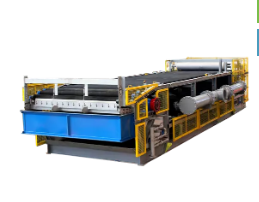
A Rubber belt filter (also referred to in many industrial contexts as a Rubber Belt Vacuum Filter) is a continuous filtration machine used for solid‑liquid separation in industries that handle slurries, sludge, and process waste streams. These filters operate by moving slurry over a horizontal rubber belt with an integrated vacuum zone underneath that draws liquid through a filter medium, forming a dewatered solid cake on the surface.
Rubberbelt filters are designed for high‑throughput and consistent performance, and they adapt well to varying feed solids concentrations and slurry properties. Their modular and automated configurations — often with DCS or PLC control — make them suitable for industrial production environments.
Rubber belt filters find extensive use across sectors that require continuous or large‑scale filtration:
Rubber belt filters are widely used in mining for dewatering concentrates, mineral slurries, and tailings. Common feed materials include gypsum from desulfurization, phosphates, iron ore tailings, and silica fines.
Application Examples:
| Material Type | Typical Use Case |
|---|---|
| Gypsum slurry | Dewatering post‑flue gas desulfurization (FGD) |
| Iron ore tailings | Dewatering & solids recovery |
| Silica/mineral salts | Mineral processing and residue management |
Slurries from chemical plants often contain dissolved solids, catalysts, or precipitates, all of which can be processed with Rubber belt filters to remove liquids and recover solids. These include silicates, phosphates, resin wastes, and synthetic pigments.
Material Examples:
Phosphates and sulphates
Catalyst residue
Organic acid slurries
Pigmented waste streams
While historically belt filters were more common in wastewater or mining, some food industry applications — such as soluble solids dewatering and juice clarification — also benefit from continuous Rubber belt filtration.
Materials:
| Food‑Related Material | Expected Filter Outcome |
|---|---|
| Vegetable oil sludges | Clarified oil recovery |
| Fruit pulp & wash waters | Juice concentration & cake formation |
Rubber belt vacuum filters are increasingly adopted in wastewater treatment for municipal and industrial effluents. Especially in applications requiring low cake moisture and effective solids removal, they help utilities meet discharge or reuse targets.
Included Materials:
Sewage sludge
Industrial wastewater solids
Fine particulate flocs
Filtration in pharmaceutical operations often requires precise solid‑liquid separation to meet purity and quality guidelines. Rubber belt filters handle fibrous biomass and chemical slurries that benefit from continuous filtration and washing.
Industries choose a Rubber belt filter for its ability to handle diverse material characteristics:
These filters can handle slurries with high solids content — from 10% solids up to much higher concentrations — making them ideal for mineral and sludge dewatering.
Where traditional filtration methods fail due to clogging or slow drainage, a Rubber belt vacuum filter maintains flow due to robust vacuum and belt motion.
With appropriate corrosion‑resistant materials in construction, Rubber belt filters process acidic or basic streams from chemical processes without rapid deterioration.
Fine solids, such as clay or colloidal particles, are effectively dewatered when proper filter cloth selection is combined with vacuum application.
To understand when a Rubber belt filter is the right choice, compare it to other common filters:
| Filter Type | Best For | Limitations |
|---|---|---|
| Rubber Belt Filter | Continuous, large volume slurry dewatering | Higher capital cost than batch filters |
| Filter Press | High precision cake dryness | Batch operation, more labor |
| Rotary Vacuum Drum Filter | Lower solids feed rates | Slower throughput than continuous belt systems |
When evaluating what materials can be processed, consider the following:
Filter cloth and vacuum level should match particle size to prevent channeling or cake blow‑through.
Feed streams with very low solids may first require thickening, whereas high solids typically improve cake formation.
Material compatibility with belt and filter cloth induces longevity — selecting rubber belts with appropriate chemical resistance is crucial.
Below is a snapshot of typical plant data showing how Rubber belt filters perform in real operations:
| Metric | Value |
|---|---|
| Feed slurry solids content | 15‑25% |
| Cake moisture content | ≤15% |
| Filtration rate (m³/m²/h) | 10‑15 (typical) |
| Belt width range | 1200‑3500 mm |
| Metric | Value |
|---|---|
| Initial sludge solids | 3‑8% |
| Final cake solids | 20‑35% |
| Throughput (continuous) | Very high capacity |
Modern systems leverage DCS or PLC technology for consistent operation, remote monitoring, and automatic belt cleaning or cake discharge.
Optimized vacuum circuits and belt design reduce power consumption and operating costs compared with older filter systems.
Filter cloth technology has evolved to resist wear while maximizing flow rates and cake release, enhancing overall performance.
Before selecting a Rubber belt filter, ask:
What is the solids content and particle size distribution of the feed?
Is continuous operation required?
What are cake dryness targets?
Are chemical corrosion or abrasive wear concerns?
What level of automation is expected?
Answering these helps align material characteristics with the right Rubber belt filter configuration.
1. What types of slurries are best handled by a Rubber belt filter?
Rubber belt filters excel with slurries that have moderate to high solids concentrations and can form a solid cake on the belt surface, such as gypsum, ore tailings, or industrial wastewater sludge.
2. Can a Rubber belt vacuum filter process viscous or sticky materials?
Yes — with proper filter cloth selection and vacuum adjustment, viscous feeds like pulp, sticky mineral concentrates, or chemical slurries can be efficiently dewatered.
3. Is pre‑conditioning required for very dilute feeds?
Very low solids feeds often benefit from pre‑thickening to improve cake formation and filtration efficiency.
4. How does particle size affect what materials can be processed?
Smaller particles may pass through some filter media or cause clogging; selecting the right cloth pore size and vacuum level ensures proper dewatering.
5. Can Rubber belt filters handle corrosive chemical slurries?
With corrosion‑resistant belt and structural materials, these filters can process aggressive slurries with proper maintenance and material selection.