English
Views: 0 Author: Site Editor Publish Time: 2026-08-21 Origin: Site


Facility managers and engineers face constant operational pressure every single day. You must balance aggressive sludge volume reduction against rising polymer costs. You also face strict energy consumption limits and tight facility footprints. Selecting the wrong dewatering equipment leads directly to excessive sludge disposal costs. It causes high maintenance downtime. Poor equipment choices also make you fail stringent environmental compliance standards. You need a reliable evaluation framework to avoid these costly mistakes. This guide introduces the exact methodology required to size, specify, and source the right equipment. You will learn how to evaluate different technologies for your specific facility needs. We cover critical steps for both municipal and industrial applications. We help you secure the best mechanical fit for your exact sludge profile.
Application Fit: Belt filter presses excel in high-throughput environments where continuous operation and moderate cake dryness are acceptable, offering lower energy consumption compared to centrifuges.
Material Selection: Belt porosity, tension thresholds, and weave materials (e.g., polyester vs. nylon) must directly match the specific gravity and chemical makeup of your sludge.
Validation: Always require on-site pilot testing or lab-scale sludge analysis before committing to an Industrial Belt Filter Press configuration.
You cannot evaluate dewatering equipment without defining your starting metrics. Facilities often fail because they skip basic baseline measurements. You must define clear success criteria before contacting any manufacturers. We recommend tracking three specific baseline metrics over a thirty-day period.
Feed Sludge Consistency: You must know the starting solids percentage. Variations in feed thickness dictate how much polymer you will need.
Target Dry Solids Percentage: Determine the required final cake dryness. Landfills impose strict limits on moisture content for disposal.
Daily Processing Volume: Calculate your peak flow demands. You must size equipment for maximum surges, not just average daily flows.
Operators frequently compare different dewatering technologies. You must understand the distinct operational realities of each machine type. Centrifuges deliver higher cake dryness. They feature a much smaller footprint. However, centrifuges demand higher energy consumption. They generate massive noise and require a massive capital cost. Screw presses operate entirely enclosed. They produce very low odor and run at low speeds. Unfortunately, screw presses generally offer much lower throughput limits.
Belt presses provide a unique middle ground. They offer lower energy usage. They feature a visible process. This visibility allows for easy operator adjustments on the fly. However, this equipment requires higher wash water volume. It also demands continuous operator monitoring.
Technology Type | Primary Advantage | Primary Disadvantage | Energy Usage |
|---|---|---|---|
Centrifuge | Highest cake dryness | High noise and capital cost | Very High |
Screw Press | Low odor and enclosed | Lower volume throughput | Low |
Belt Press | Visible process and scalable | Requires wash water setup | Moderate to Low |
You must also identify specialized applications early. Standard equipment fails in extreme industrial environments. Outline use cases requiring specific configurations. Mining operations and agricultural facilities need heavy-duty builds. For complex chemical liquid-solid separation, you need a specialized Liquid Leaching Belt Press. These customized units handle demanding extraction processes flawlessly.
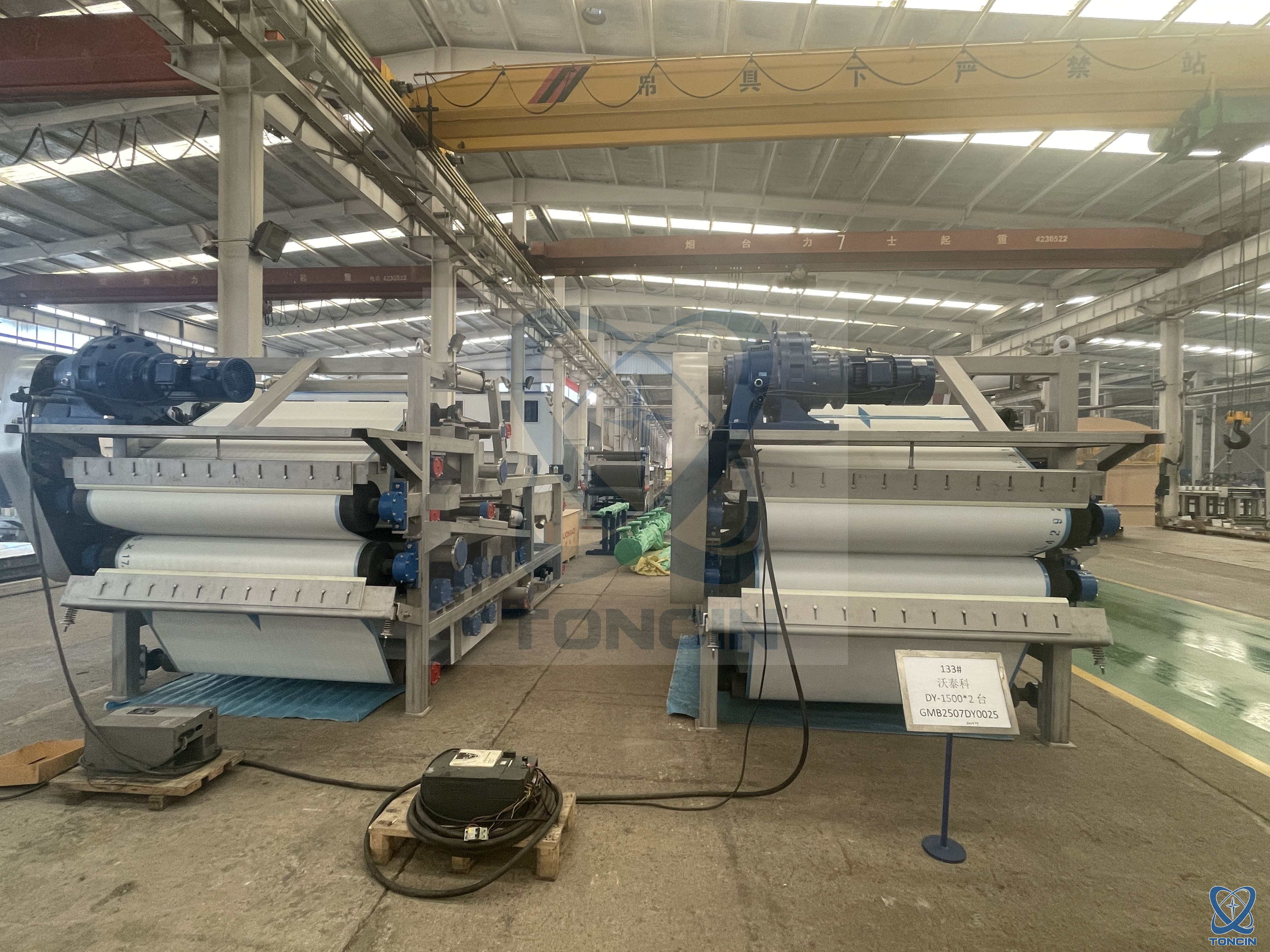
Throughput capacity determines your operational ceiling. You must match the active belt width to current and future peak flow requirements. Standard widths typically range from 0.5m to 3.0m. Wider belts process significantly more volume. You must also evaluate the gravity drainage zone length. A longer drainage zone handles wetter, more difficult sludge types easily.
Roller configuration directly impacts final cake dryness. Analyze the impact of roller diameter carefully. Examine the overall roller arrangement. The industry relies on a simple trade-off principle here. More pressure rollers yield drier cake. They squeeze out stubborn capillary water. However, additional rollers increase mechanical stress. They cause faster wear on the belts. You must balance dryness goals against maintenance frequency.
Polymer conditioning efficiency dictates your daily operating budget. Flocculant consumption represents a major ongoing operational expense. Equipment design affects this consumption heavily. You must evaluate dynamic mixers versus static mixers. Dynamic mixers blend polymers more aggressively. They often reduce total chemical usage. Static mixers require less maintenance but might consume more polymer.
Automation keeps your facility running safely. Evaluate the Programmable Logic Controller (PLC) capabilities. Modern PLCs manage real-time tensioning perfectly. They handle automatic belt tracking. Proper tracking prevents catastrophic belt failures. Belts drifting off rollers destroy themselves in minutes. Good automation eliminates this massive risk completely.
Choosing the right consumables ensures long-term reliability. Selecting the perfect Industrial Dewatering Belt Filter medium dictates your daily success. You must evaluate material chemistry carefully. Standard municipal applications use polyester weaves. Polyester handles neutral pH environments well. Nylon offers much higher abrasion resistance. You assess polyester versus nylon based on sludge pH and abrasiveness.
Weave and porosity matter immensely. We measure porosity in Cubic Feet per Minute (CFM). You must balance the drainage rate against the solids capture rate. High porosity drains water rapidly. However, it lets fine solids slip through. Tight porosity captures fine solids perfectly. Unfortunately, tight weaves blind easily. Clogging pushes excessive solids into the filtrate. You must test samples to find the exact CFM balance.
Frame and bearing construction determine overall lifespan. Emphasize the necessity of robust metals. Demand 304 or 316 stainless steel frames. Carbon steel corrodes entirely too fast. Specialized sealed bearings are absolutely mandatory. They withstand continuous high tension. They survive highly corrosive environments. Open bearings fail quickly in wet sludge facilities.
Best Practice: Always request dual-sealed spherical roller bearings.
Common Mistake: Accepting epoxy-coated carbon steel frames in high-humidity rooms.
Evaluate the wash water systems closely. Examine the design of the spray bars. Self-cleaning nozzles minimize fresh water consumption. They maintain belt permeability consistently. Blocked nozzles create dirty streaks on the belt. Dirty belts cannot drain water. Proper wash systems keep your operation highly efficient.
Space constraints dictate your final layout choices. Detail the vertical versus horizontal footprint realities. Vertical machines save valuable floor space. Horizontal machines require larger rooms but offer easier access. You must include required clearance for belt changes. Leave at least three feet of clearance around the machine. Maintenance access is strictly non-negotiable. Odor control enclosures demand additional overhead space.
Environmental and compliance factors govern daily operations. Reference standard operational guidelines closely. Environmental protection agencies outline strict filtrate quality rules. You cannot return dirty filtrate to the headworks. Agencies also monitor facility noise levels. Occupational limits strictly regulate worker exposure. You must contain aerosolized pathogens safely. Proper ventilation hoods capture dangerous off-gassing completely.
Acknowledge the specific experience required to run this equipment. Operating a belt filter press optimally takes real skill. Operators must read the sludge visually. Highlight the necessity of accessible grease points. Easy-to-replace wear parts reduce daily frustration. You must implement clear Standard Operating Procedures (SOPs). Clear SOPs ensure thorough daily washdowns. Poor washdowns destroy equipment faster than anything else.
You must ask equipment manufacturers specific, demanding questions. Never accept vague marketing claims. Demand concrete performance guarantees. Do they guarantee specific cake dryness? Will they guarantee specific solids capture rates? Manufacturers must base these guarantees on your specific sludge sample. Generic performance curves mean nothing in the real world.
Demand pilot testing availability immediately. Request a mobile pilot unit test. This test validates polymer dosing curves on your actual site. It confirms real-world throughput limits perfectly. Pilot testing reveals hidden challenges early. Never approve capital expenditure without on-site validation.
Assess Service Level Agreements (SLAs) carefully. Review their domestic inventory levels. Can they ship replacement belts overnight? Do they stock heavy bearings and tracking valves nearby? Equipment breaks down eventually. Fast parts availability minimizes your facility downtime. A cheap machine becomes highly expensive when parts take six weeks to arrive.
Choosing the right Belt Filter Press requires careful evaluation. You must balance desired cake dryness against long-term operational costs. Evaluate polymer consumption carefully. Scrutinize the mechanical durability of frames and bearings. Protect your investment through rigorous pilot testing.
Your next step requires data collection. Gather thirty days of sludge characteristic data. Record your daily feed solids percentage. Track your peak flow rates accurately. Use this specific data to create a definitive request for proposal (RFP). Send this detailed RFP to your shortlisted manufacturers.
A: Timelines vary drastically based on sludge abrasiveness. Highly abrasive industrial sludge degrades belts rapidly. A typical lifespan ranges from 2,000 to 6,000 operating hours. Excellent tension management and clean wash water extend this timeframe significantly. Always keep a spare belt in stock to prevent sudden downtime.
A: Testing is strictly required to determine exact figures. However, a benchmark range typically falls between 5 to 15 lbs of active polymer per dry ton of solids. Dynamic mixing valves often reduce this consumption rate. Routine operator adjustments keep polymer usage fully optimized.
A: Yes, you can recycle wash water efficiently. However, secondary filtration is absolutely mandatory. You must filter the filtrate before reusing it. This prevents fine solids from clogging the spray nozzles. Clogged nozzles ruin belt permeability instantly during the washing process.
A: Belt presses offer a massive energy efficiency advantage. They require significantly lower horsepower motors to operate. Centrifuges consume enormous energy to spin heavy bowls at massive speeds. A well-maintained belt press saves thousands of dollars in annual facility electricity costs.