English
Views: 0 Author: Site Editor Publish Time: 2026-08-12 Origin: Site


Mine operators face mounting pressure today to eliminate high-risk settling ponds. Global regulatory bodies now demand strict environmental compliance. Facilities must also improve water recovery rates to remain financially viable. Legacy dewatering methods often fall short of modern processing expectations. Traditional horizontal plate-and-frame systems require intensive manual labor constantly. They also consume massive amounts of plant floor space. Operators increasingly adopt automated, high-pressure vertical filtration instead. This modern approach delivers superior cake dryness consistently. It ensures continuous, reliable operation across demanding environments. We designed this article as an objective evaluation guide. Plant managers and processing engineers can use it effectively. We help you weigh the initial capital expense against long-term operational savings. You will discover how upgrading transforms your dewatering workflows entirely. We explore technical feature-to-outcome benefits thoroughly in this guide. We also detail high-value mineral applications and potential implementation risks. You can apply these insights immediately.
Strategic ROI: Vertical filter presses offset higher initial capital costs through significantly lower operational expenditures (OPEX), fully automated cycles, and reduced footprint.
Compliance & Risk Mitigation: Ideal for enabling dry stack tailings and eliminating the need for hazardous settling ponds.
Superior Output: Gravity-assisted feeding and high-pressure squeezing consistently yield ultra-low cake moisture, critical for processing specialized ores like gold and lithium.
Operational Readiness: Successful implementation requires careful integration with upstream thickeners and a clear maintenance protocol for filter cloth management.
Legacy dewatering systems create severe bottlenecks for modern mines. Conventional horizontal presses demand constant manual intervention daily. Operators must physically scrape and discharge filter cakes frequently. These older machines consume sprawling plant footprints. Relying on settling ponds introduces massive environmental liabilities. You face constant risks of toxic leakage or overflow events. Regulatory fines can cripple profitability rapidly. Plant efficiency suffers when older machines break down.
Modern operations require a radically different approach. A vertical filter press offers a distinct mechanical advantage here. It utilizes gravity-fed slurry alignment to fill filter chambers rapidly. The multi-stage processing sequence includes powerful pumping, high-pressure squeezing, and compressed air blowing. This exact sequence drastically reduces cycle times. You process more tonnage in fewer hours. Gravity works for you, not against you.
We must conduct a realistic capital versus operational expenditure check. Initial procurement costs for vertical systems run noticeably higher. Equipment acquisition requires a larger upfront budget approval. However, you will see immediate reductions in daily labor costs. Wash water consumption drops significantly. Energy efficiency improves dramatically across high-tonnage operations. We see a verifiable return on investment quickly. The equipment pays for itself through sustained, automated daily savings. You shift resources away from maintenance and toward active production.
Ignoring the hidden costs of manual labor required for horizontal plate scraping.
Failing to account for the land value consumed by large settling ponds.
Underestimating the energy savings gained from synchronous plate operations.
Mining plants must maximize water recovery urgently today. High-pressure extraction allows for closed-loop water recycling. You capture exceptionally clean filtrate directly from the press. Plants return this water straight to the processing circuit. This action directly supports site sustainability mandates. It drastically reduces reliance on local freshwater sources. It also eliminates the need for sprawling, hazardous settling ponds entirely. Your site achieves better environmental compliance instantly.
Achieving ultra-low cake moisture represents another critical goal. Vertical systems pair flexible diaphragm squeezing with aggressive compressed air blowing. We can map these technical features to direct business outcomes. Drier cakes lower your bulk transportation costs instantly. You haul less water weight. You also produce stable, solid materials suitable for dry stacking. Moisture reduction prevents structural failures in tailings storage facilities. Geotechnical stability improves significantly.
Footprint efficiency matters immensely in crowded processing plants. The vertical, stacked-plate design maximizes filtration area per square meter. It scales upward instead of sprawling outward. Fully automated cycles compound this spatial advantage. Systems run continuous cloth washing protocols automatically. Operators do not need to intervene between cycles. You achieve higher throughput without adding operational headcount. Wash nozzles clean the cloth simultaneously during cake discharge.
Monitor filtrate clarity daily to ensure filter cloths remain intact.
Calibrate compressed air blowers weekly to maximize cake dryness.
Implement automated sensors to track cloth alignment continuously.
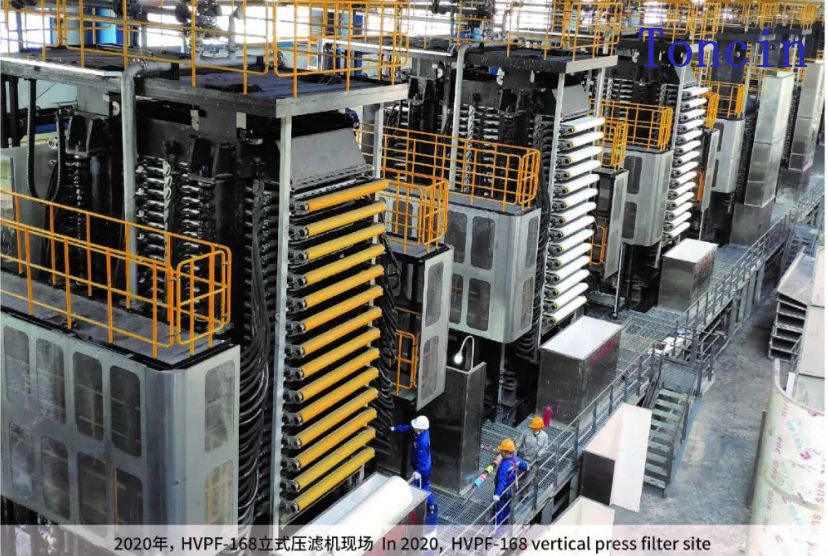
Certain mineral commodities justify advanced filtration technology rapidly. Precious metals recovery demands exceptional chemical precision. A Gold Processing Tower Filter proves critical for Merrill-Crowe processing circuits. Facilities utilizing intensive cyanidation also benefit immensely. Maximum pregnant solution recovery directly impacts your overall financial yield. Every single drop of recovered solution holds significant monetary value. High-pressure washing stages extract residual gold effectively. You leave almost zero profit behind in the filter cake.
Critical minerals processing presents equally strict demands. Battery metals require stringent purity levels and tight moisture control. A Lithium Battery Filter Press now serves as an industry standard. Lithium carbonate and lithium hydroxide filtration need contaminant-free processing environments. High-pressure squeezing ensures thorough washing efficiency. It prevents chemical cross-contamination reliably. The closed design protects sensitive products from airborne particles. Quality control improves drastically.
Tailings management represents a massive global compliance focus. Environmental regulators increasingly mandate dry stack tailings methods. Vertical presses act as powerful, verifiable compliance tools. They align perfectly with the Global Industry Standard on Tailings Management. They reduce geotechnical risks associated with aging wet tailings dams. You produce compact, stackable dirt instead of hazardous sludge. This protects local ecosystems and secures your operating license permanently.
Plant engineers often debate between equipment styles. Let us compare throughput and cycle times directly. A Vertical Tower Press Filter utilizes synchronous cake discharge. All plate chambers open simultaneously to release the dried cake. This cuts cycle downtime dramatically. Sequential horizontal plate shifting takes much longer. Horizontal machines release one or two plates at a time. The time difference compounds over annual production schedules.
Space and infrastructure needs differ wildly. Vertical models require substantial ceiling height clearances. They also demand robust structural steel support to handle dynamic loads. Sprawling horizontal presses consume massive amounts of valuable floor space. You must plan facility layouts accordingly.
Maintenance dynamics require a transparent, honest assessment. Horizontal presses offer simpler mechanical troubleshooting. Your onsite mechanics can usually service them using basic hand tools. Vertical presses require highly specialized training. Technicians must understand complex hydraulics and continuous cloth drive mechanisms. Sensors govern the entire automated process precisely.
We recommend a clear shortlisting logic. Choose vertical configurations for continuous, high-volume operations. They excel when you strictly require less than 15% moisture. Select horizontal presses for lower-budget, smaller-scale batch processing tasks.
Evaluation Criteria | Vertical Tower Press Filter | Horizontal Filter Press |
|---|---|---|
Cycle Speed | Fast (Synchronous discharge) | Slow (Sequential discharge) |
Cake Moisture | Ultra-low (9-15%) | Moderate (15-25%) |
Automation Level | Fully automated | Semi-automated to Manual |
Footprint | Compact (Vertical scaling) | Large (Horizontal sprawling) |
Capital Expense | Higher | Lower |
Successful equipment rollout requires strategic plant planning. We warn operators against making siloed equipment purchases. You must integrate the new filter press perfectly into your existing process. It needs proper alignment alongside upstream thickeners. Optimal feed density prevents uneven filter cake formation. If thickener underflow varies randomly, press performance suffers immediately. Slurry density must remain consistent for optimal squeezing. We recommend installing agitated surge tanks before the press feed pumps.
Air and water utility demands catch many buyers off guard. Do not overlook these critical site requirements. Vertical systems need high-capacity plant air for cake blowing. The core blowing phase consumes substantial cubic feet per minute. They also require high-pressure water for effective cloth washing. Your facility must support these heavy utility loads consistently. Underpowered air compressors will ruin your cake moisture targets.
Maintain realistic expectations regarding filter cloth lifespan. Cloth wear happens continuously during abrasive mineral processing. Budget properly for these necessary operating consumables. Schedule preventative maintenance carefully. This avoids unplanned, expensive downtime entirely. Inspect cloth tracking sensors frequently. Misaligned belts cause premature wear and sudden tearing. Keep spare belts in your local warehouse inventory always.
Purchasing a press without analyzing upstream thickener rheology.
Under-sizing the plant air compressor system.
Failing to train local maintenance crews on hydraulic systems.
Defining your project scope serves as the absolute first step. Gather critical operational data before engaging equipment vendors. You need your specific slurry particle size distribution. Note the specific gravity and target daily throughput. Define your desired residual moisture precisely. You must know these parameters to size the machine correctly. Vendors cannot provide accurate proposals without them.
Testing guarantees eventual production success. Standard protocols outlined in a HVPF Filter Press Guide emphasize strict validation. Bench-scale or pilot-plant testing remains absolutely non-negotiable. You must validate exact cycle times first. Test different filter cloth selections before authorizing full-scale procurement. Slurry behavior often surprises engineers during initial trials. Pilot tests reveal these surprises safely.
Evaluate your potential vendors carefully using structured criteria. Focus heavily on their local aftermarket support capabilities. Ask about the guaranteed availability of specific spare parts.
Verify the local availability of specific replacement diaphragms.
Check lead times for custom filter cloth belts.
Assess the vendor's automation software integration capabilities.
Confirm SCADA compatibility for remote monitoring.
Review past installation case studies in similar ore types.
The system must communicate seamlessly across your plant network. Remote monitoring allows for optimal troubleshooting.
Let us review the final strategic verdict. Vertical filter presses do not fit every small-scale mine perfectly. However, they represent the definitive choice for high-yield, continuous operations. They prioritize extreme moisture reduction and hands-free automation above all else. They mitigate environmental liabilities effectively by eliminating settling ponds. You recover more water and capture more valuable minerals.
Take decisive action today. Schedule a technical consultation soon. Request a thorough site audit from a qualified filtration engineer. Initiate slurry pilot testing to prove your project feasibility. Upgrading your dewatering infrastructure secures long-term operational viability. It protects your bottom line and the surrounding environment simultaneously. Start gathering your slurry data today.
A: A vertical filter press typically achieves 9-15% residual cake moisture. Exact results depend heavily on ore mineralogy and particle size distribution. Finer particles may retain slightly more moisture. Coarser slurries drain much faster.
A: These presses produce a dry, stackable cake immediately alongside clear filtrate water. You bypass the slow process of long-term gravity settling. Plants recycle the clear water instantly back into ongoing operations.
A: Yes, maintenance is generally more complex. Vertical units feature intricate pneumatics, hydraulic drives, and cloth-tracking sensors. However, this mechanical complexity is offset by the complete elimination of manual scraping and discharge labor.
A: Installations demand high-pressure wash water for continuous cloth cleaning. You also need high-capacity compressed air for core blowing and cake drying. Finally, the facility needs robust structural steel support to handle heavy dynamic loads.