English
Views: 0 Author: Site Editor Publish Time: 2026-05-30 Origin: Site


In continuous dewatering and washing processes, a sudden or gradual drop in vacuum pressure is a critical operational reality. It directly degrades cake dryness. It slows down your overall production. It also significantly increases your downstream thermal drying costs. You cannot afford to ignore these inefficiencies for long.
We know horizontal belt filter vacuum loss is rarely a single-point failure. Instead, it is often a compounding issue. It involves mechanical wear, material misalignment, and pneumatic inefficiencies acting together. Tracking down the exact leak requires patience and a structured approach.
This guide sets a clear expectation. It provides a systematic diagnostic framework to isolate the root cause of vacuum loss. You will learn how to evaluate repair versus upgrade scenarios. Finally, it helps you implement strong preventive measures for your vacuum belt filter.
Vacuum loss typically stems from three primary zones: the mechanical wear of slide strips/deck seals, filter cloth blinding/wrinkling, or vacuum pump and manifold inefficiencies.
Visual diagnostic cues—such as "wet lines" on the filter cake or material slipping off cracked rubber curbing—are early indicators of edge seal failure.
Decision-stage solutions range from localized repairs (e.g., chemical cleaning, patching) to high-ROI upgrades (e.g., UHMW polyethylene edge trackers, hot vulcanized endless belts) that reduce maintenance downtime to under three days.
Standardizing your preventive maintenance SOPs ensures consistent tension control and maximizes the lifespan of critical wear parts.
Defining optimal performance is the first step in maintaining your equipment. Success means maintaining target vacuum pressure thresholds consistently. It also means achieving a highly uniform cake solid content across the entire belt. When you hit these targets, your downstream processes run smoothly and efficiently.
The cost of inaction is severe. Even a minor 10-15% drop in vacuum efficiency increases residual moisture in the filter cake. Wetter cakes demand exponentially higher energy output in downstream thermal drying stages. In industries like mining or chemical processing, poor vacuum also means lower recovery rates. You lose valuable filtrates to the waste stream. Every drop of unrecovered filtrate represents lost revenue.
We must view vacuum troubleshooting through a strict operational lens. It is not just a routine maintenance task. It is a crucial operational decision. You must balance the immediate cost of quick fixes against long-term reliability. Sometimes, retrofitting worn parts makes better business sense than applying temporary patches.
To fix the problem, you must first isolate it. We can break down the root causes of vacuum loss into distinct, verifiable categories.
Worn Slide Strips: Slide strips endure constant friction. Over time, they wear down and create uneven gaps. These gaps allow ambient air to bypass the filter bed entirely.
Debris Buildup: Slurry sometimes breaches the containment zone. Debris builds up in the vacuum pan. This accumulation prevents the deck seals from forming a flush, airtight connection.
Blinding in Strips: Operators often notice localized cloth blinding. This usually happens because shower bars clog. Clogged nozzles leave untreated strips on the cloth, severely reducing permeability and vacuum draw.
Wrinkling and Misalignment: Uneven tension causes the cloth to bunch up. Faulty deviation correction systems also force the cloth out of alignment. Wrinkles lift the cloth off the drainage belt, breaking the edge vacuum seal instantly.
The main rubber drainage belt acts as the foundation of your vacuum zone. Constant tension and chemical exposure cause stretching. You will eventually see cracking along the rubber curbing. Damaged curbing allows raw slurry to spill over the sides. This spill introduces ambient air directly into the active vacuum zone, destroying your pressure.
Do not forget to look outside the filter bed. Mechanical issues in the external system frequently cause pressure drops. An underperforming vacuum pump lacking sufficient RPM cannot maintain the required draw. Stuck or whistling relief valves constantly bleed air. Damaged extraction hoses also pull in dead air before it even reaches the filter.
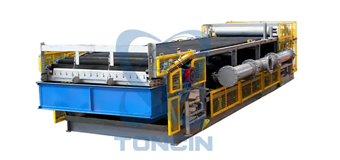
Engineers on the floor need a practical, implementation-focused checklist. You cannot guess where the leak originates. You must test for it systematically.
Start with simple visual cues. The "wet line test" is highly effective. Instruct your operators to observe the discharging filter cake. Look for continuous wet lines running lengthwise. These lines pinpoint exactly where the vacuum seal is failing along the underlying belt.
Next, perform a light penetration check. This requires a planned shutdown. Clean the filter cloth thoroughly. Shine a high-intensity flashlight from the back of the cloth. Look at the front side carefully. This reveals microscopic tears, wear spots, or deeply blinded zones that chemical washing missed.
Move on to your tensioning pneumatics. Check the operational pressure parameters. Most systems target between 0.5 and 0.6MPa. If pressure drops below this, the belt slips. Slipping breaks the dynamic seal.
Listen closely to the vacuum canister. Do you hear whistling at the relief valves? This is a primary diagnostic red flag. Whistling indicates a deeply clogged filter element. It can also mean debris is trapped inside the main suction line. The system starves for air and forces the safety valve open.
Observed Symptom | Probable Root Cause | Immediate Action Required |
|---|---|---|
Wet lines on filter cake | Slide strip wear / Edge seal gap | Inspect slide blocks and realign deck seals. |
Relief valve whistling | Suction hose or canister blockage | Shut down and flush extraction lines. |
Slurry spilling over edges | Cracked/stretched rubber curbing | Plan for curbing vulcanization repair. |
Cloth bunching at center | Uneven pneumatic tension | Recalibrate tensioning cylinders to 0.5-0.6MPa. |
Avoid assuming all issues are obvious or isolated. Sometimes you face compounding issues. For example, slight foundation settlement causes uneven cake formation. One side gets too thick, while the other side runs thin. This disrupts sealing and causes uneven wear simultaneously. These situations require careful, sequential isolation rather than quick guesses.
Decision-makers must evaluate parts replacement carefully. You must weigh the benefits of a simple patch against a comprehensive system retrofit. Here is how to approach the major repair categories.
Legacy spring or rope tracking systems present chronic problems. They stretch over time. This stretching leads directly to cloth wrinkling and premature wear. Compare these to modern UHMW polyethylene edge trackers. UHMW trackers provide rigid, frictionless guidance. They deliver a high return on investment because they drastically reduce cloth replacement frequency.
Installing endless rubber belts traditionally takes weeks of downtime. This causes severe production bottlenecks. You must evaluate alternative methods. Consider on-site hot vulcanization of corrugated curbing. Specialized crews can perform this splice directly on the machine. This method compresses your total downtime to under three days. It minimizes production disruption while restoring full vacuum integrity.
When dealing with blinded strips, evaluate your wash system. You can increase the frequency and concentration of chemical washing. However, this increases consumable costs and degrades the cloth fibers faster. Alternatively, implement self-cleaning shower bars. They use internal brushes to clear nozzles automatically. They cost more upfront but save significant water and chemical expenses over time.
If vacuum loss becomes chronic due to changing process conditions, you may need a capital evaluation. Pumping thicker, heavier cakes strains legacy support systems. Retrofitting the belt support system is often necessary for long-term scalability.
Belt Support System Retrofit Options | ||
Support Type | Best Suited For | Impact on Vacuum & Friction |
|---|---|---|
Water Slide Deck | Thin cakes, slow belt speeds | High vacuum integrity, low mechanical friction. Requires seal water. |
Air Cushion Deck | Thick cakes (>25mm), fast speeds | Eliminates water usage. Extremely low friction. Reduces belt wear. |
Roller Support Deck | Extremely heavy mineral tailings | Handles massive loads. Higher mechanical maintenance. Moderate seal complexity. |
Operational maturity relies on strict risk mitigation. Standardizing your preventive maintenance reduces emergency breakdowns and keeps your vacuum levels consistent.
Supply chain delays ruin production schedules. We recommend stocking critical, long-lead-time spares on site. Keep spare edge trackers, molded EPDM rubber belts, deck seals, and backup filter cloth readily available. Having these parts on hand minimizes emergency downtime from weeks to mere hours.
You must outline a baseline maintenance cadence. Relying on memory guarantees failure. Implement the following standard operating procedures:
Verify the horizontal alignment of all guide and tensioning rollers weekly.
Lubricate pneumatic slide blocks and check air line integrity every shift.
Routinely recalibrate automated deviation sensors to ensure rapid tracking response.
Perform a thorough high-pressure wash of the vacuum pan during every scheduled shutdown.
Do not compromise on consumables. Emphasize the importance of choosing a premium horizontal belt filter cloth. Look for fabrics with highly stable tensile strength. Ensure the warp and weft density matches your slurry profile perfectly. The right cloth prevents premature elongation, maintains tension, and preserves the vacuum seal for months.
Troubleshooting vacuum leaks requires a disciplined hierarchy. Always check your pneumatics and valves first. Next, inspect the filter cloth and tracking mechanisms for wrinkles or blinding. Finally, evaluate the heavy mechanical components like slide strips and rubber curbing.
If you experience chronic vacuum loss, take action immediately. Conduct a full mechanical audit of your belt support systems. Record your tension metrics and visual wear patterns. Consult with experienced filtration engineers regarding modular upgrades. Installing self-cleaning showers or UHMW trackers can permanently eliminate recurring seal failures.
A: Look for irreversible blinding. If aggressive chemical cleaning fails to restore normal permeability, replace it. You should also check for structural tears. These often appear in high-stress edge zones. Excessive elongation is another trigger. It ultimately defeats your automatic tensioning system. Once the cloth stretches beyond the tensioner’s compensation limit, it causes severe vacuum leaks. Replace it immediately to restore process stability.
A: A whistling relief valve points to a severe airflow restriction. It usually indicates a solid blockage in your suction hose. It can also mean a deeply clogged vacuum canister filter element. When the system starves for air, the pressure spikes. This forces the safety relief valve to vent aggressively. Shut down the system. Inspect the extraction lines for trapped slurry debris. Clean the filter element thoroughly.
A: Yes. Even slight foundation tilting disrupts operations. Settling causes uneven slurry distribution across the belt. You will see a thicker cake on one side and a thin, highly permeable cake on the other. This uneven bed directly disrupts the vacuum pan seal. The system draws disproportionate air through the thinner side. To fix this, you must re-level the structural frame. This restores uniform cake formation.