English
Views: 0 Author: Site Editor Publish Time: 2026-05-14 Origin: Site


Dewatering high-solids slurries introduces unique processing hurdles. Rapid settling rates often create uneven cake formation across the filtration area. High abrasive wear destroys traditional equipment prematurely. Variable feed concentrations routinely disrupt continuous plant operations. Every procurement decision carries massive financial stakes for your facility. Selecting the wrong equipment inflates downstream thermal drying costs significantly. It increases wash water consumption needlessly. It also triggers frequent, expensive plant downtime.
Process engineers and plant managers face a complex equipment evaluation process. We designed this article to provide a pragmatic, vendor-neutral framework. You will learn how to evaluate and shortlist horizontal dewatering systems effectively. We explore system architectures, core component sizing, and vendor shortlisting strategies. You can balance initial capital investments against long-term operational efficiency. Let us examine the defining criteria for industrial slurry dewatering success.
Selecting the right system requires balancing continuous throughput with target cake moisture and wash efficiency.
The choice between a standard belt filter and a heavy-duty rubber belt vacuum filter depends heavily on slurry abrasiveness and chemical compatibility.
Total Cost of Ownership (TCO) evaluations must prioritize vacuum pump efficiency, filter cloth lifespan, and friction belt replacement cycles.
Vendor shortlists should be based on their ability to provide transparent pilot-scale testing and proven scale-up data.
You must establish a strict baseline for acceptable residual moisture. Process engineers balance target cake dryness against continuous plant capacity. Lower residual moisture reduces downstream thermal drying expenses significantly. However, extending drying time on the belt slows overall production. You need an optimal setpoint. It must satisfy daily capacity demands while meeting strict moisture limits.
Best practices for balancing throughput and dryness include:
Monitor feed density continuously to adjust belt speeds dynamically.
Maintain a consistent cake thickness to ensure uniform vacuum distribution.
Measure residual moisture hourly during the initial commissioning phase.
Avoid speeding up the belt prematurely, as it often causes wet cake discharge.
Many industrial applications demand extremely high product purity. Chemical processing and metallurgy operations rely on effective cake washing. You must evaluate co-current versus counter-current washing zones. Co-current washing works well for simple displacement tasks. Counter-current setups reduce total wash water usage drastically. They maximize solute recovery by reusing wash liquid across multiple stages. We recommend counter-current designs when fresh water consumption limits exist.
Slurry characteristics rarely stay constant in real-world environments. Particle size distribution fluctuates daily based on upstream milling. Feed density shifts unexpectedly during grade changes. The filtration system must tolerate these sudden changes. A robust vacuum belt filter for high solids slurry manages these variations smoothly. It maintains steady output despite severe upstream disruptions. Proper feed box design distributes the slurry evenly, preventing heavy solids from pooling.
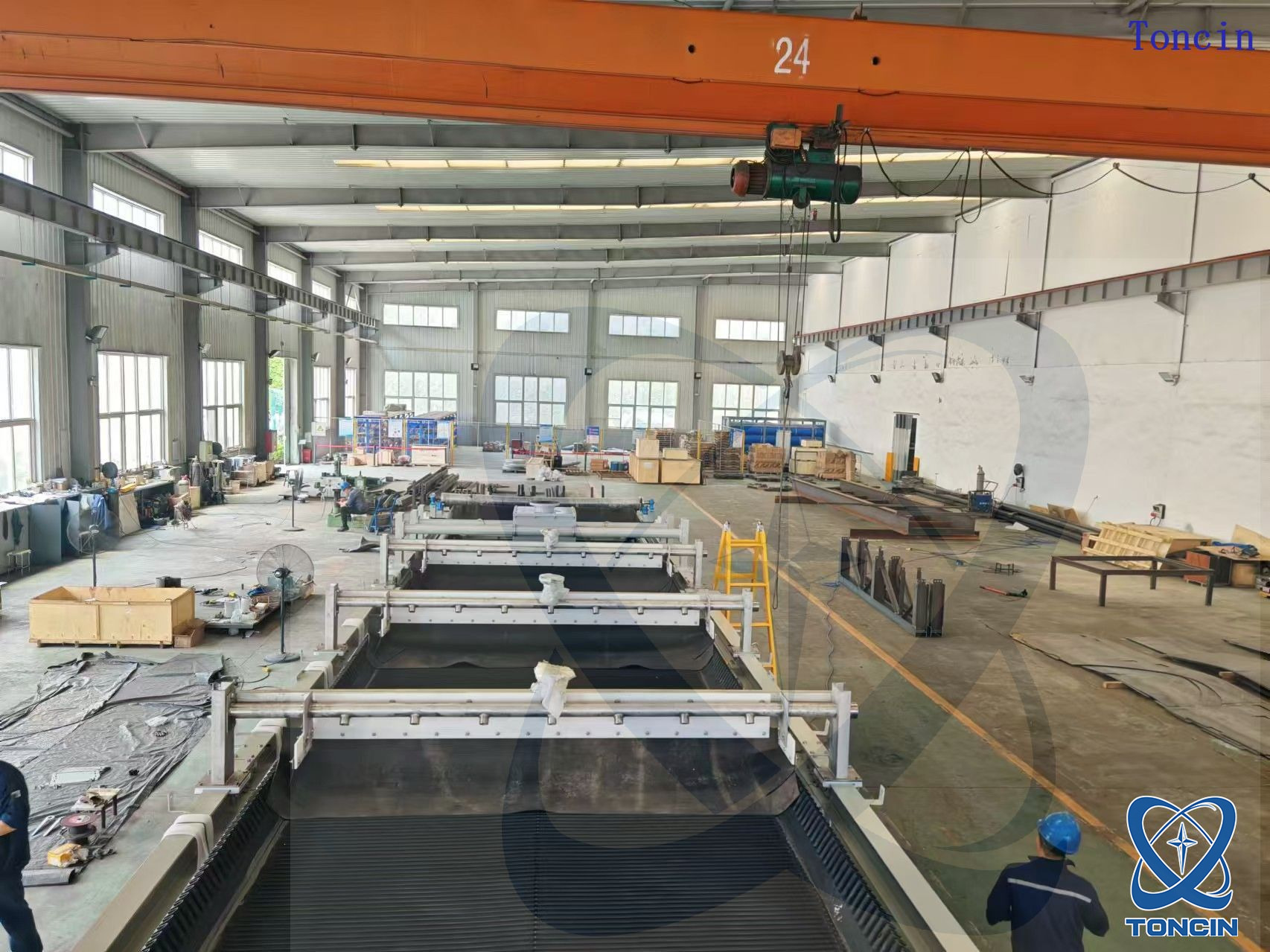
These systems dominate applications involving fast-settling, abrasive slurries. Heavy mineral concentrates require extreme heavy-duty construction. A rubber belt vacuum filter provides reliable, continuous filtration under immense mechanical stress. The thick rubber carrier belt absorbs the impact of heavy solids. You must assess rubber compound compatibility carefully before purchasing. Natural rubber suits standard mining applications well. Synthetic blends handle aggressive conditions better.
Chart: Rubber Compound Compatibility Comparison | |||
Rubber Compound | Ideal Application | Temperature Limit | Chemical Resistance |
|---|---|---|---|
Natural Rubber | Standard mining, neutral pH slurries | Up to 65°C | Low to Moderate |
EPDM | High-temperature industrial processing | Up to 120°C | High (Acids/Alkalis) |
Neoprene | Oil-contaminated or greasy slurries | Up to 90°C | Moderate (Oils/Solvents) |
Consider your installation footprint when selecting the frame structure. Modular frames allow easier transport to remote plant locations. They speed up on-site assembly considerably. You can expand modular capacity later by adding extra vacuum zones. Fixed frames offer superior rigidity. They handle extreme heavy-duty loads without flexing. A standard belt filter must integrate into your current layout smoothly. Evaluate your floor space and ceiling clearance before choosing a frame style.
Cake formation speed dictates your drive selection. Continuous operation works best for fast-filtering, coarse slurries. It maximizes throughput efficiently. Indexing operation suits slower-filtering materials better. It allows distinct, longer washing phases without breaking the vacuum seal. Automated pneumatic tracking systems keep the belt aligned constantly. They reduce premature edge wear substantially. Manual tracking mechanisms require constant operator attention and often fail.
Generating consistent negative pressure remains a crucial operational requirement. The right vacuum pump maintains exact pressure levels across the entire filtration area. It handles varying cake thicknesses easily without stalling. Avoid excessive energy consumption during operation. Size the pump accurately based on predicted airflow needs, not just liquid volume. Liquid ring pumps handle moisture well but consume steady seal water. Dry pumps eliminate filtrate carry-over risks entirely. However, they require stricter upstream liquid protection to prevent catastrophic failure.
The filter cloth retains fine solids efficiently while letting clear liquid pass. Choose your weave patterns carefully based on particle size. Incorrect permeability causes rapid cloth blinding. Monofilament yarns release the cake easier than multifilament yarns. Automated high-pressure cloth washing systems are mandatory for high-solids applications. They spray both sides of the cloth continuously. They dislodge embedded particles effectively, keeping permeability high. Never operate a system without a reliable cloth wash station.
The heavy drainage belt glides directly over stationary suction boxes. This continuous movement creates significant friction heat. Analyze the design of the slide blocks closely. Look for PTFE or UHMWPE materials in the wear strips. These industrial plastics minimize friction coefficients dramatically. They reduce the electrical motor load required to pull the belt. They extend the operational lifespan of the entire drive system. Lubrication water injected into the slide blocks further reduces drag.
Physical space requirements go far beyond the main filter unit. You must accommodate multiple pieces of ancillary equipment. Filtrate receivers need sufficient vertical clearance to operate. Wash water manifolds require dedicated, accessible piping runs. Vacuum pumps need vibration-isolated foundations. Vertical integration planning ensures gravity-assisted drainage wherever possible. It prevents liquid pooling inside the extraction pipelines. Poor spatial planning leads to cramped maintenance walkways and safety hazards.
High-solids abrasive loading destroys filtration components quickly. Conduct a transparent assessment of expected replacement intervals before committing. Filter cloths degrade over a few weeks. Wear strips wear down over several months. Heavy rubber belts deteriorate over several years. Understanding operational expenses requires knowing exact failure timelines. Implement strict inspection routines to prevent unexpected breakdowns.
Follow these essential maintenance protocols:
Inspect filter cloths weekly for signs of localized blinding or tearing.
Check synthetic wear strips monthly to ensure even friction distribution.
Measure the rubber belt thickness quarterly to track abrasive degradation.
Calibrate pneumatic tracking sensors bi-annually to prevent belt drifting.
Modern dewatering relies heavily on smart digital controls. Ensure the system PLCs communicate easily with your facility. They must integrate seamlessly into your existing plant DCS. Operators need real-time monitoring capabilities from the central control room. Key tracking metrics include vacuum levels, belt speed, and incoming feed rates. Automated adjustments prevent sudden process upsets. If the feed density drops, the system should automatically slow the belt speed.
Lab-scale Buchner funnel tests fall critically short for modern applications. They cannot replicate dynamic, high-solids operating conditions. Demand comprehensive on-site pilot testing from your potential vendors. Vendor-facility testing works sometimes, but only if slurry properties remain perfectly stable during transport. Slurries often age, agglomerate, or degrade in transit. On-site pilot units provide the most accurate representation of continuous commercial operation.
Pilot data must translate directly into commercial success. Scrutinize the vendor's scale-up methodology carefully. Ask for proven references in similar high-solids applications. The vendor must guarantee specific throughput targets contractually. They must also guarantee final cake moisture levels on a commercial scale. Do not accept vague performance promises. Request detailed case studies showing how they scaled similar pilot data previously.
Industrial equipment breaks down eventually under heavy loads. Compare vendors based strictly on their aftermarket support infrastructure. Spare parts availability is critical for maintaining continuous production. Field service responsiveness minimizes catastrophic plant downtime. Look for guaranteed uptime SLAs (Service Level Agreements) during negotiations. Strong technical support protects your operational investment long-term. Choose a partner who stocks critical wear parts locally.
Specifying a vacuum filtration system requires strategic planning. You must balance initial capital expenditure against long-term maintenance realities. Operational efficiency relies on correct component sizing and material selection. Focus on handling variable feed conditions and optimizing vacuum pump performance.
Take these actionable next steps to advance your project:
Define your precise feed slurry characteristics, including particle size and density.
Establish hard baselines for your target cake moisture and required daily throughput.
Contact two to three reputable vendors for preliminary pilot testing proposals.
Review your internal engineering team's capacity for integrating new automation controls.
A: These filters routinely handle feed slurries with solids concentrations ranging from 20% to 65% by weight. The exact limit depends on the specific gravity of the solids and the viscosity of the carrier liquid. Highly abrasive, fast-settling slurries perform exceptionally well at higher concentrations.
A: A rubber belt unit uses a continuous, thick rubber carrier belt to support the filter cloth and absorb heavy mechanical stress. An indexing filter uses a stationary tray that moves incrementally. Rubber belt units excel in continuous, high-throughput, abrasive applications.
A: Pump sizing depends primarily on the total active filtration area, cake porosity, and altitude of the installation. Highly porous cakes allow more air to pass through, requiring larger volumetric airflow capacities to maintain the target negative pressure.
A: Prevent blinding by selecting a cloth with the correct weave pattern and air permeability. Additionally, you must install an automated, high-pressure continuous cloth washing system. Spraying water at high velocity dislodges trapped fines before the cloth re-enters the feed zone.